Trade and Supply Chain Finance
-
Japan’s FSA Selects Stablecoin Trade Settlement Pilot for Payment Innovation Project

TradeWaltz, NTT DATA and four major Japanese banks will test whether a bank’s approval of an export receivable can trigger stablecoin settlement directly from a digital trade workflow — shifting the focus from faster payment rails to the connection between trade data, financial controls and settlement. Japan’s Financial Services Agency has selected a trade-settlement proof… Read more
-
Once digital title can move almost instantly, why should the rest of the trade transaction still have to wait? That is the more important question raised by Japan’s latest move toward recognising electronic bills of lading. On 28 September 2026, Nikkei reported that the Japanese government plans to submit amendments to the Commercial Code and… Read more
-
Saudi Arabia’s Supply Chain Finance Consultation: What SAMA Proposes and What DigitalTrade4.EU Recommends

The Saudi Central Bank (SAMA) is consulting on new rules for supply chain finance, with the aim of establishing a clearer regulatory framework for supply chain finance providers, intermediaries and the digital platforms that support them. The consultation has two stated objectives: to establish standards and procedures governing supply chain finance and its intermediation, and… Read more
-
Europe’s Tokenized Financial Markets Will Depend on Trust Frameworks, Not Anonymity
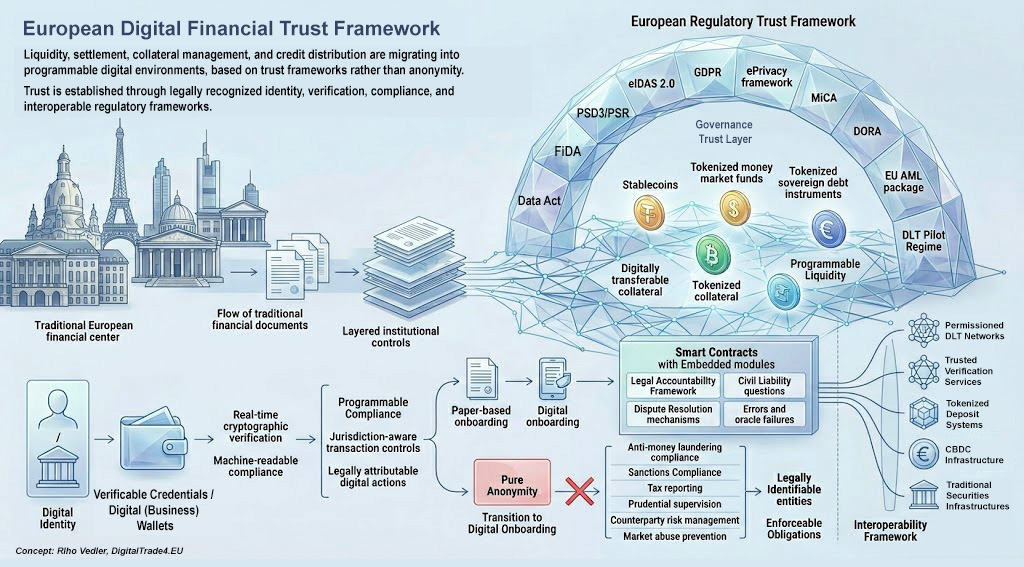
European financial markets are entering a structural transformation in which liquidity, settlement, collateral management, and credit distribution are increasingly migrating into programmable digital environments. Stablecoins, tokenized money market funds, tokenized sovereign debt instruments, and digitally transferable collateral are no longer speculative concepts confined to crypto-native ecosystems. They are emerging as components of institutional financial infrastructure.… Read more
-
Smart Data and Digital Trade: How Data-Driven Value Chains Could Transform International Trade and Trade Finance
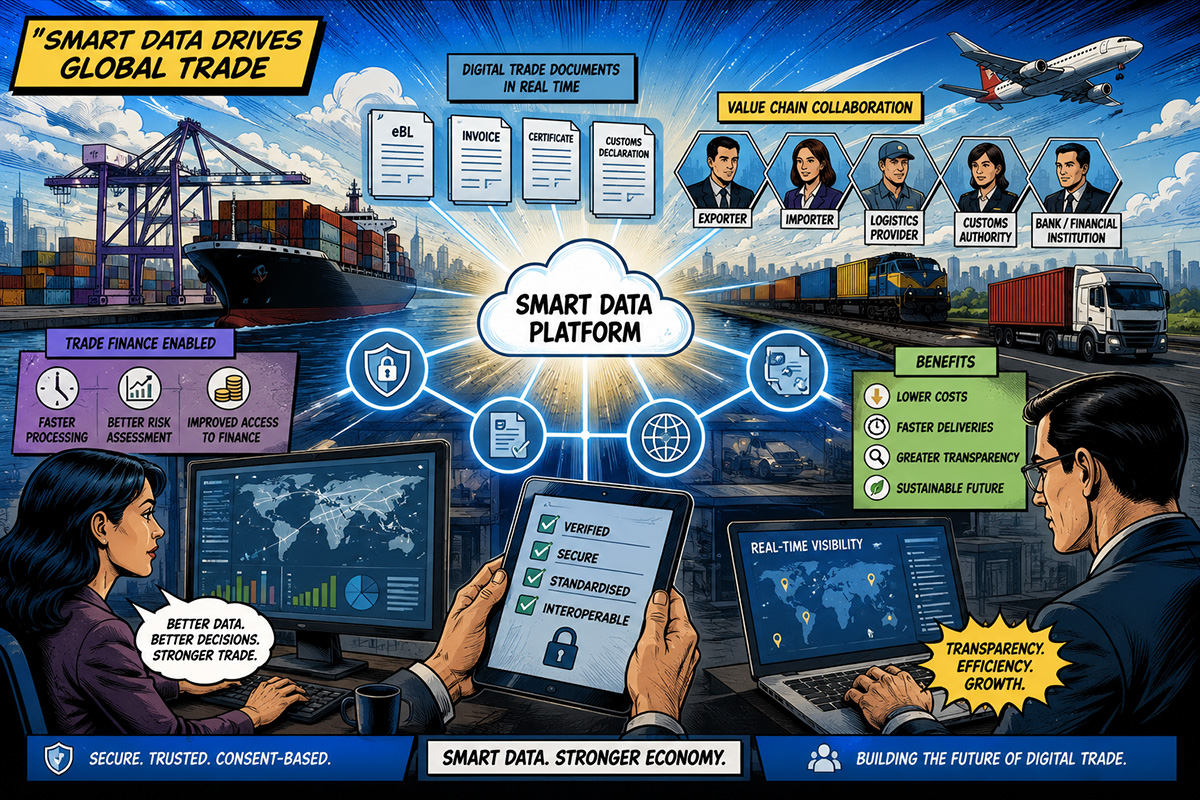
The UK Department for Business and Trade commissioned report “Economic analysis: understanding the costs and benefits of smart data use cases” examines how Smart Data schemes could reshape the economy, supply chains, and financial ecosystems over the next 15 years. The report focuses particularly on the role of Smart Data in international trade, trade finance,… Read more
-
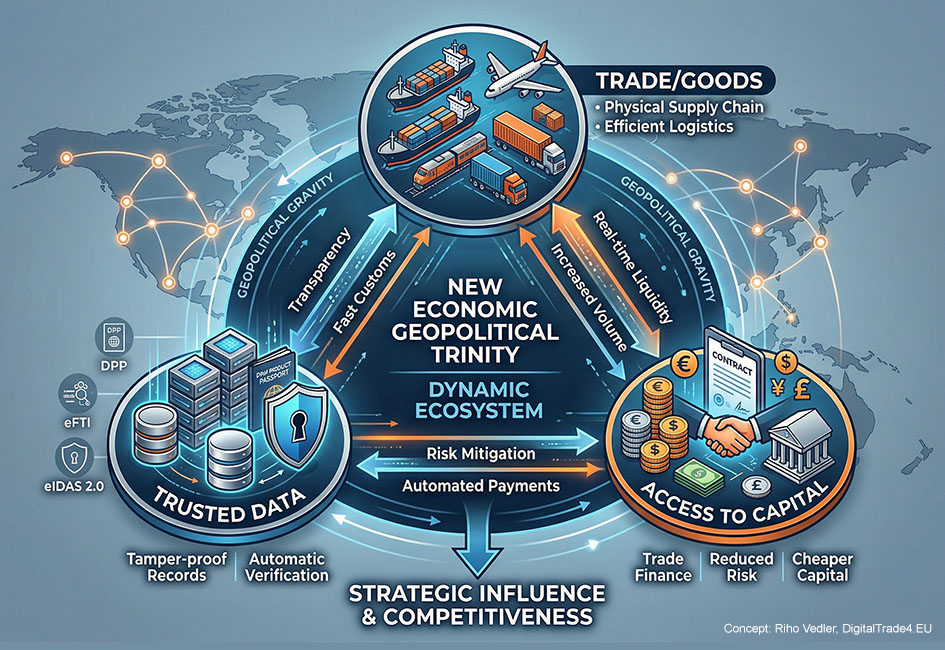
The European Union has quietly built one of the world’s most advanced digital regulatory ecosystems. With instruments such as the Digital Product Passport (DPP), electronic Freight Transport Information (eFTI), and eIDAS 2.0, the EU is shaping how data, trust, and compliance function within its internal market. Yet beyond its borders, this regulatory strength risks remaining… Read more
-
Digital Trade in Africa: Beyond Infrastructure Towards a Functional Digital Economy
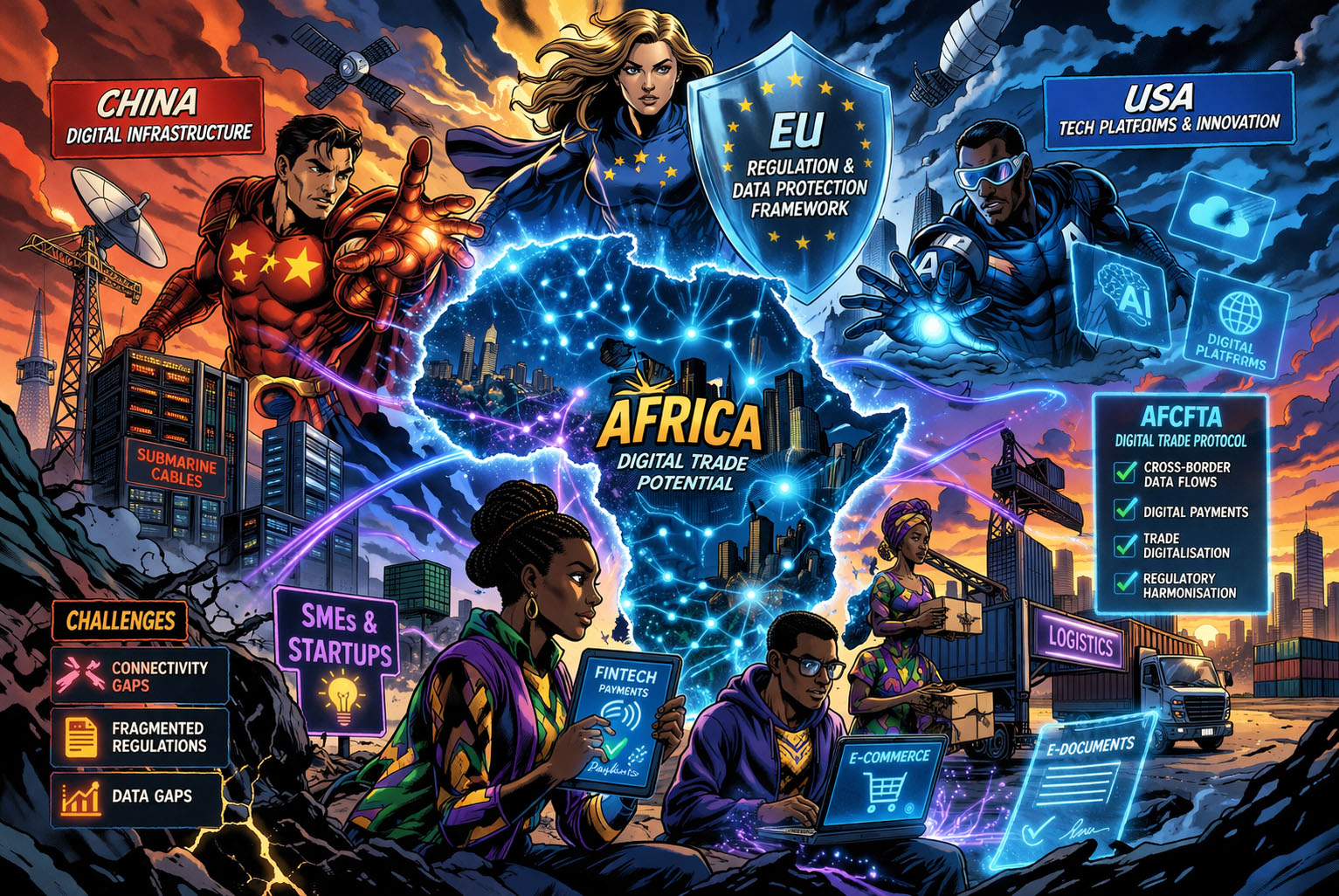
Africa’s digital economy is entering a decisive phase. With the adoption of the Digital Trade Protocol under the African Continental Free Trade Area (AfCFTA), the continent has taken a major step toward building a unified digital market. Yet, despite strong political momentum, Africa remains a marginal player in global digital trade, with most exchanges still… Read more
-
ISO 20022 Harmonisation as the Backbone of Digital Trade and Logistics Integration
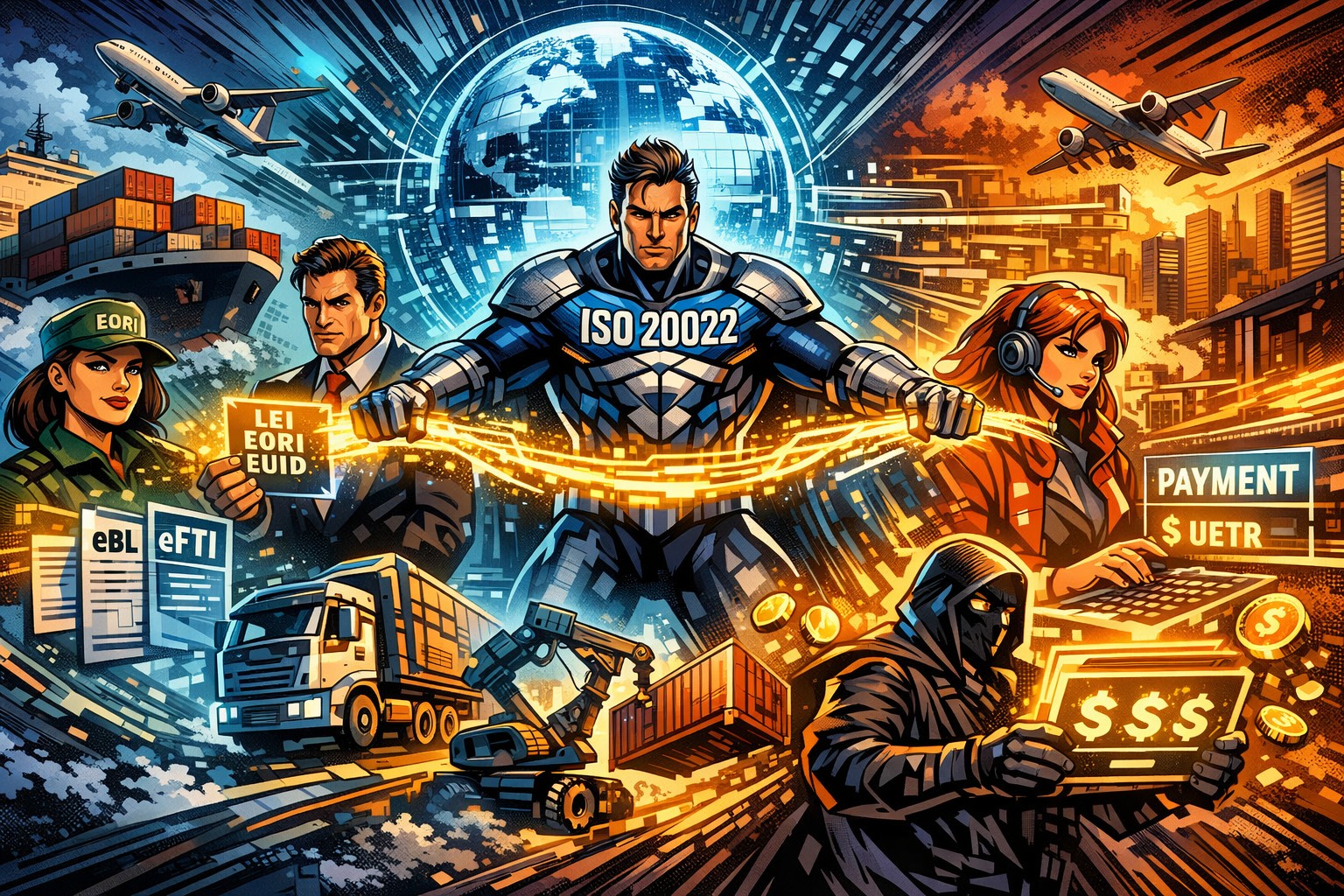
The digital transformation of international trade is accelerating, yet a fundamental bottleneck persists: the fragmentation of payment systems. The study “Fostering ISO 20022 Harmonisation: Cross-border payments interoperability and extension (PIE) task force – Task Team 3, Follow-up report (February 2026)” highlights that while ISO 20022 has been widely adopted, its implementation remains uneven across jurisdictions… Read more
-
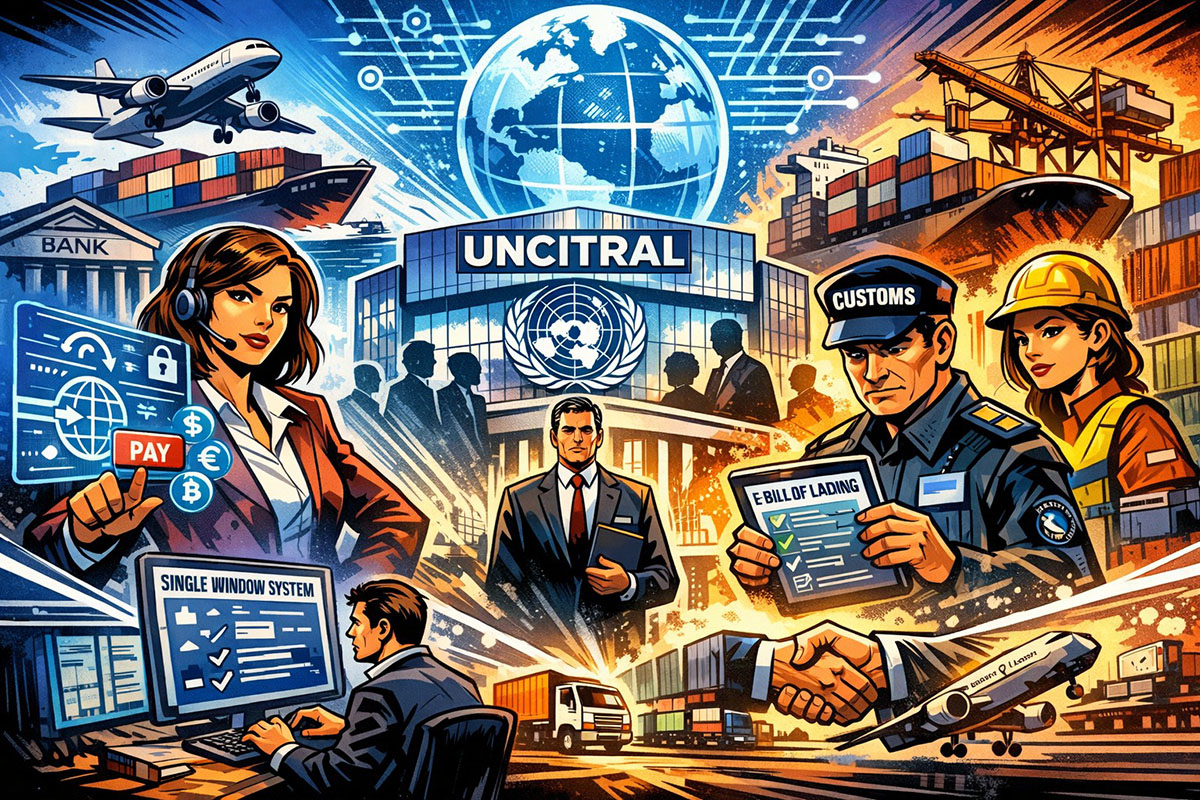
As global trade becomes increasingly digital, legal systems are racing to keep up. Payments are faster, documents are electronic, and supply chains span jurisdictions with very different rules. Against this backdrop, the United Nations Commission on International Trade Law (UNCITRAL) has quietly launched a set of processes that could shape how digital trade works across… Read more
-
United Nations Adopts New Convention Enabling Digital and Flexible Use of Cargo Documents
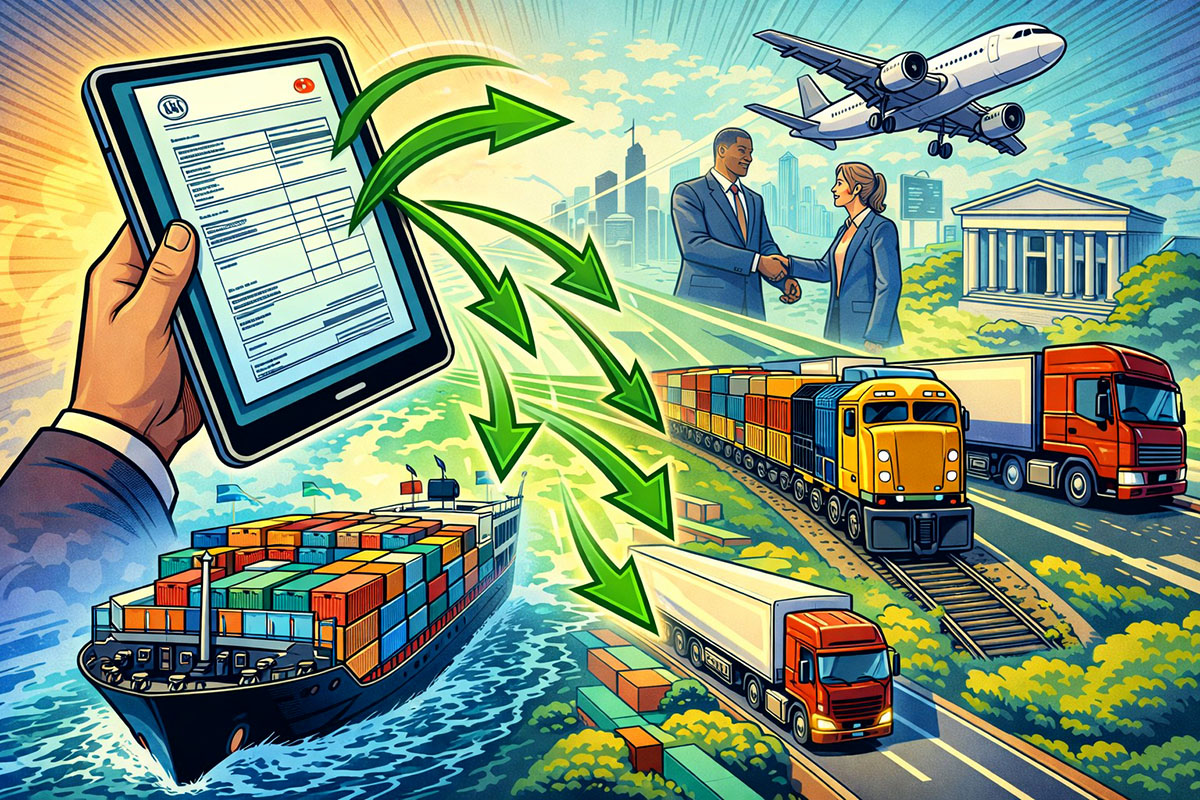
In December 2025, the United Nations General Assembly adopted the United Nations Convention on Negotiable Cargo Documents (NCDs), developed under the auspices of UNCITRAL and finalized in July 2025. The Convention represents a significant step forward in simplifying and digitalising international trade by extending the use of negotiable transport documents to all modes of transport.… Read more