Trade and Supply Chain Finance
-
Next-Generation Trade Corridors: How Digital Trade Superhighways Are Taking Shape
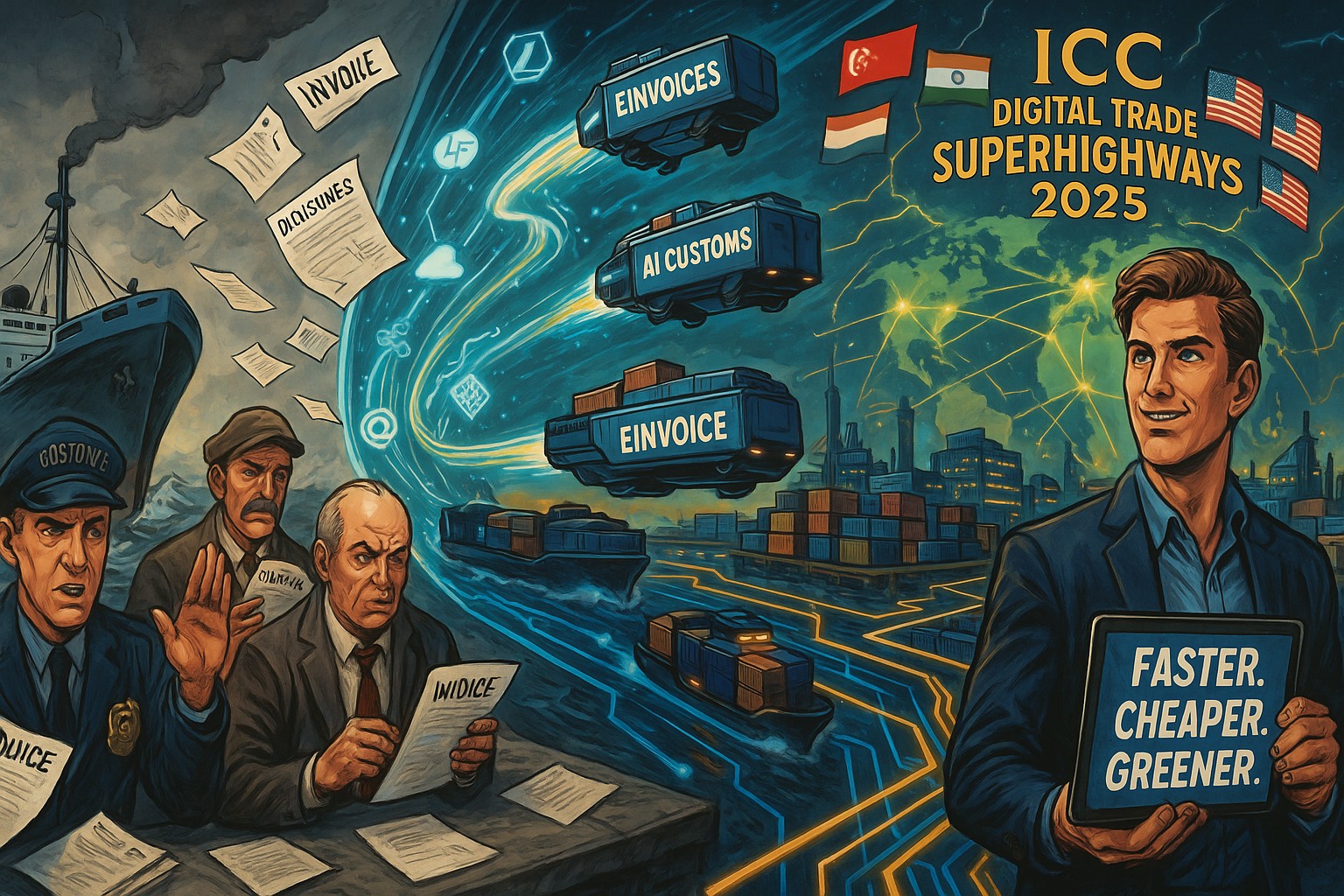
The global trading system stands at a crossroads. The International Chamber of Commerce (ICC United Kingdom) has published its 2025 report “Next-generation trade corridors — Building digital trade superhighways”, calling on governments and businesses to modernise the world’s trade corridors, making them faster, cheaper, and more sustainable. The report outlines a vision for a paperless,… Read more
-
Global E-Commerce Agreement Could Add Up to USD 8.7 Trillion to the World Economy
Digital trade has grown nearly twice as fast as goods trade over the past decade and is becoming a key driver of global growth. This conclusion comes from a WTO Staff Working Paper titled “Great Expectations: Quantifying the Potential Economic Impact of the WTO Agreement on E-Commerce” (ERSD-2025-06, authored by Eddy Bekkers, Javier López-González, and… Read more
-
The Dutch government has introduced Bill No. 36 743, amending Book 8 of the Dutch Civil Code (Burgerlijk Wetboek) to recognize the use of an electronic bill of lading (elektronisch cognossement) in maritime transport. The aim is to align Dutch law with the UNCITRAL Model Law on Electronic Transferable Records (MLETR), thus creating legal equivalence… Read more
-
Digital Assets, Electronic Trade Documents, and the Challenge of Private International Law
In June 2025, the Law Commission of England and Wales published Consultation Paper No. 273 on Digital assets and (electronic) trade documents in private international law, including Section 72 of the Bills of Exchange Act 1882. The paper addresses one of the most pressing questions in modern commerce: how should cross-border disputes involving blockchain, crypto-tokens,… Read more
-
Unlocking Europe’s Financial Data Future: Insights from the FiDA Debate
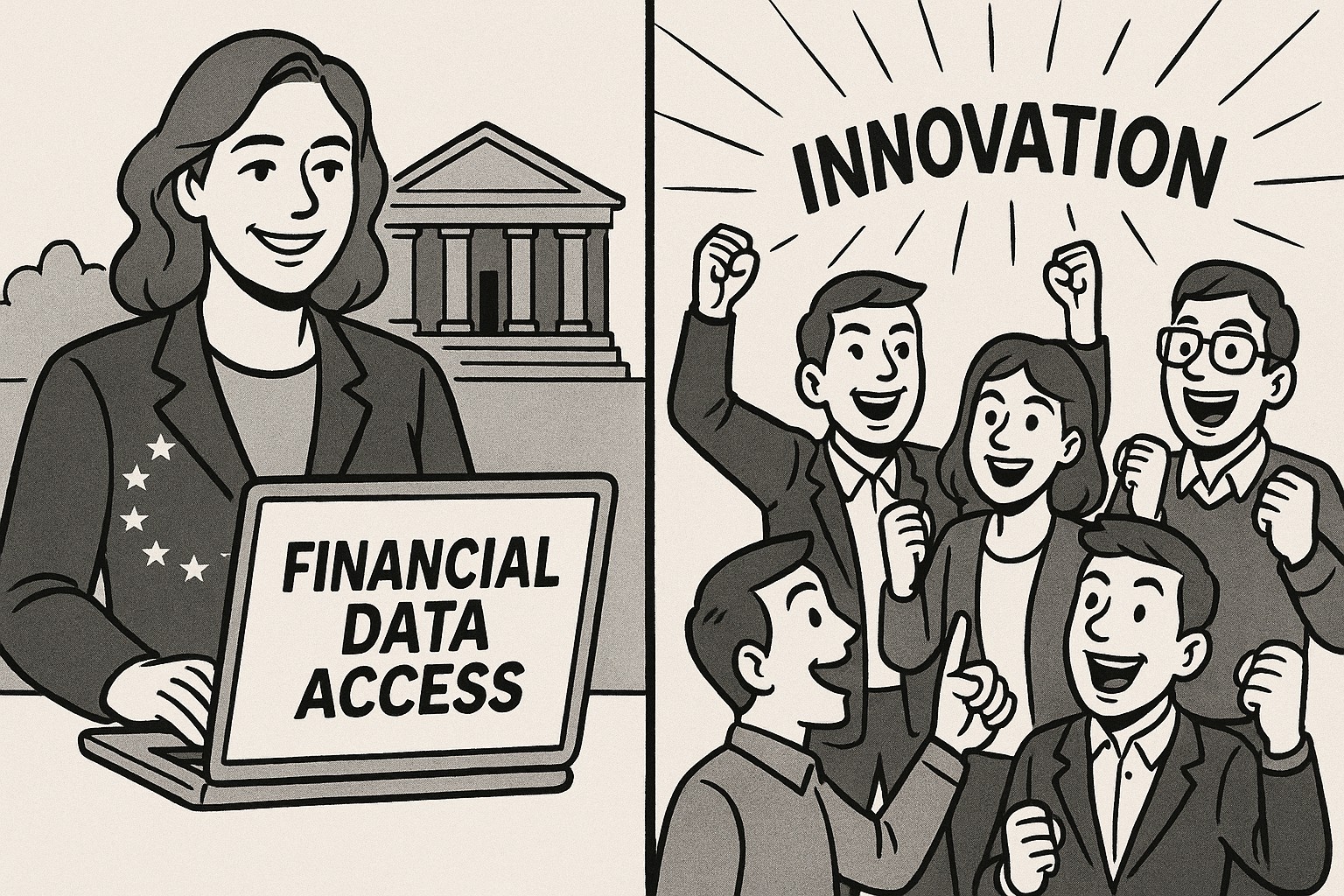
The European Union’s proposed Financial Data Access Regulation (FiDA) is emerging as a cornerstone in the ongoing transformation of Europe’s financial markets. The regulation aims to establish a comprehensive framework for data sharing across the financial sector, building on lessons from PSD2 and aligning with broader initiatives in open finance, digital identity, and the EU’s… Read more
-
International trade still runs on paper. From bills of lading to customs declarations, stacks of documents follow goods as they move across borders. Despite the digital revolution, the majority of these processes remain analogue, slow, and expensive. The latest OECD Trade Policy Paper – The Digitalisation of Trade Documents and Processes: Going Paperless Today, Going… Read more
-
The Economic Commission for Latin America and the Caribbean (ECLAC) recently published a study titled “The Potential Use of Blockchain in International Trade and its Facilitation” (International Trade Series No. 188, 2025). The report highlights how blockchain technology can reshape cross-border trade by fostering transparency, traceability, and efficiency in global supply chains. A Disruptive Technology… Read more
-
The European Union’s Global Gateway (GG) has been presented as the Union’s flagship initiative to mobilise up to €300 billion in sustainable infrastructure and connectivity investment worldwide between 2021 and 2027. More than four years into its implementation, however, the strategy still faces the challenge of moving from political ambition to practical delivery. A recent… Read more
-
France Becomes First European Union Country to Fully Embrace Digital Trade Instruments
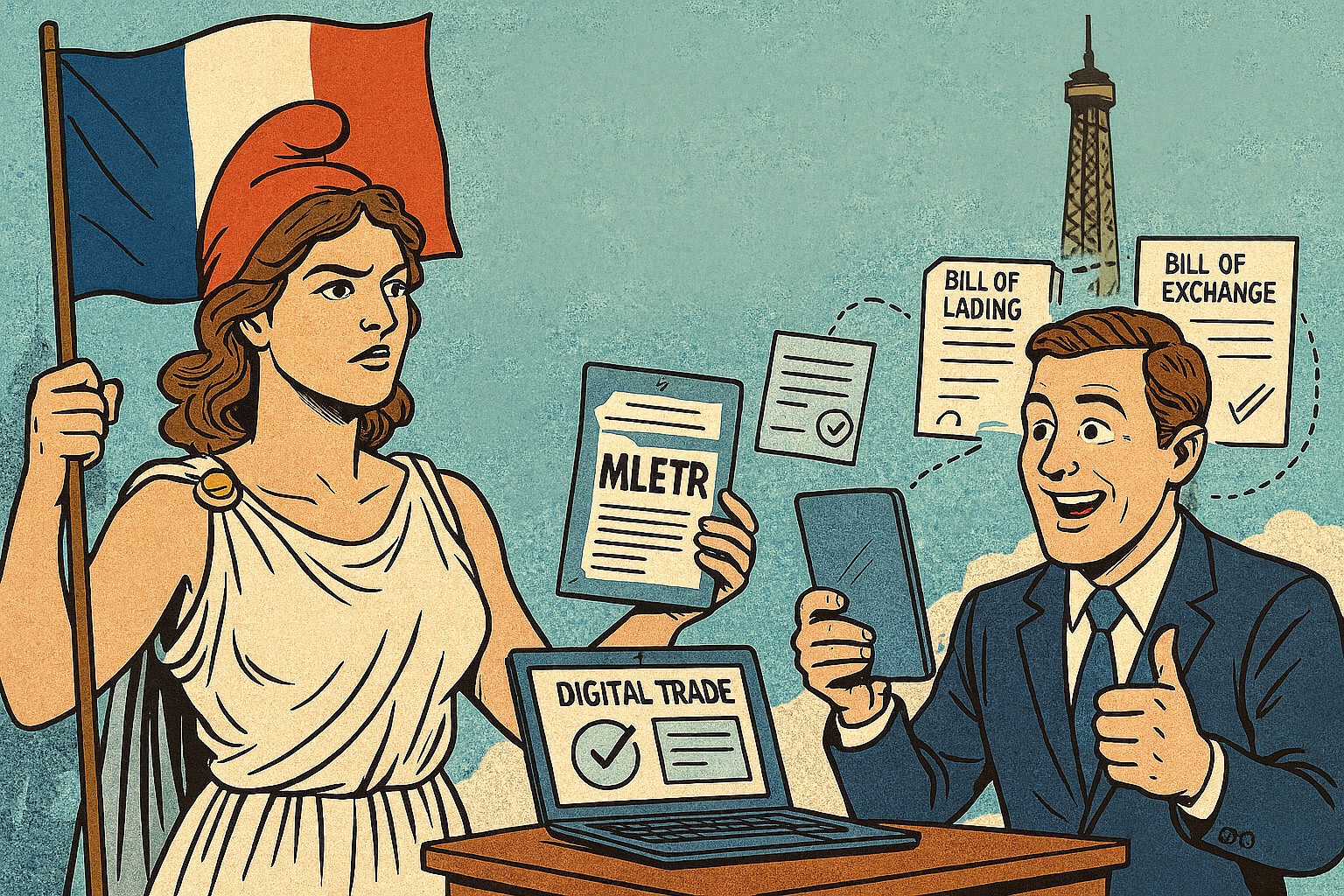
Paris, August 14, 2025 – France has taken a historic leap into the digital age of global trade. With the publication of Decree No. 2025-811 in the Journal Officiel, the country has fully transposed the UNCITRAL Model Law on Electronic Transferable Records (MLETR) into its national legal framework. The reform, long awaited by the trade… Read more
-
EU Businesses Scramble to Recalibrate Supply Chains Amid Global Trade Turmoil
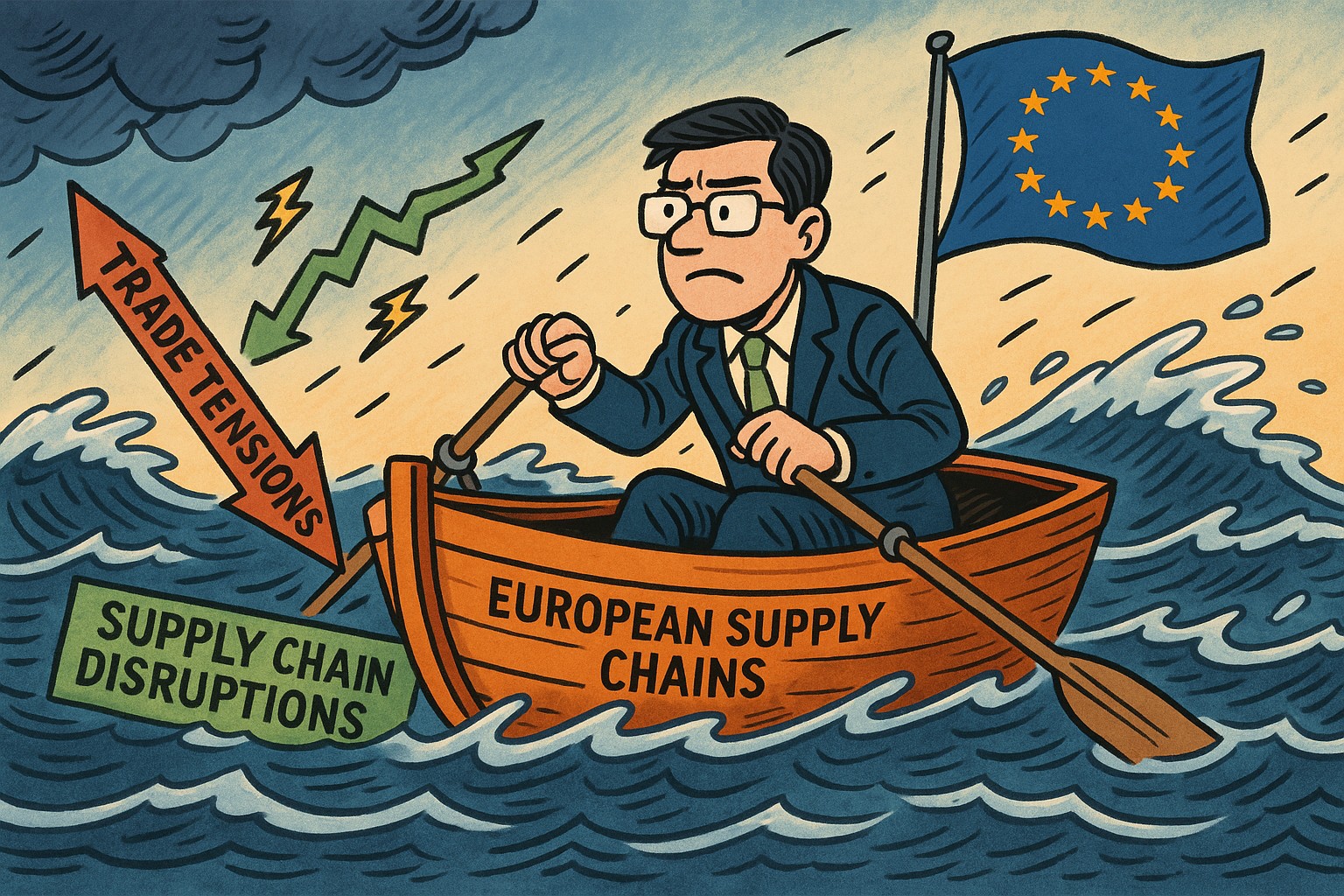
Brussels, June 27, 2025 – Faced with rising global trade tensions and escalating geopolitical uncertainty, European Union businesses are scrambling to adapt their supply chains, according to a new report from the European Investment Bank (EIB) released today. The report, “Shock Waves from Turbulent Times: How EU Businesses Recalibrate Supply Chains,” reveals that EU companies… Read more