interoperability
-
Japan’s FSA Selects Stablecoin Trade Settlement Pilot for Payment Innovation Project

TradeWaltz, NTT DATA and four major Japanese banks will test whether a bank’s approval of an export receivable can trigger stablecoin settlement directly from a digital trade workflow — shifting the focus from faster payment rails to the connection between trade data, financial controls and settlement. Japan’s Financial Services Agency has selected a trade-settlement proof… Read more
-
Canada’s Bill C-39: A Broad Economic Reform Bill with a Major Digital Trade Component

Canada has introduced a wide-ranging economic reform bill that could significantly change the country’s rules for major infrastructure projects, transportation and supply chains, labour relations and, less visibly, digital trade. Bill C-39, formally titled An Act respecting certain measures to strengthen the economy and carrying the short title Building Canada Strong Act, was introduced in… Read more
-
Once digital title can move almost instantly, why should the rest of the trade transaction still have to wait? That is the more important question raised by Japan’s latest move toward recognising electronic bills of lading. On 28 September 2026, Nikkei reported that the Japanese government plans to submit amendments to the Commercial Code and… Read more
-
Saudi Arabia’s Supply Chain Finance Consultation: What SAMA Proposes and What DigitalTrade4.EU Recommends

The Saudi Central Bank (SAMA) is consulting on new rules for supply chain finance, with the aim of establishing a clearer regulatory framework for supply chain finance providers, intermediaries and the digital platforms that support them. The consultation has two stated objectives: to establish standards and procedures governing supply chain finance and its intermediation, and… Read more
-
Estonia’s Digital Agenda 2035 – The World’s Most Ambitious Digital State Project?
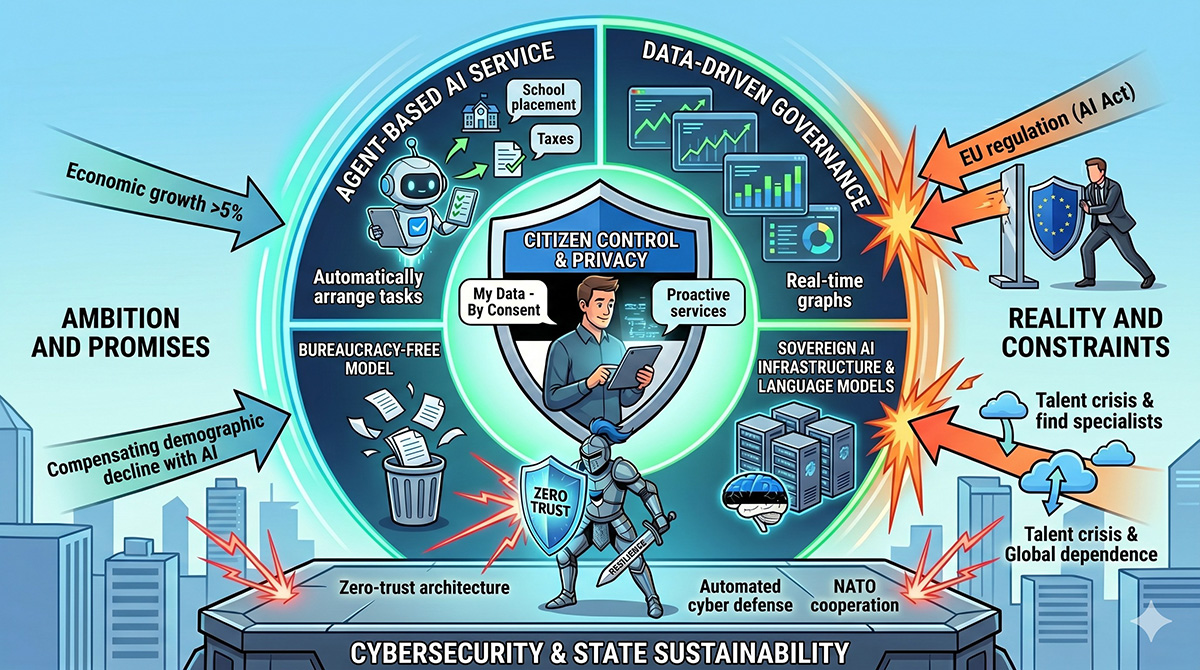
Estonia’s new strategy document, Estonia’s Digital Agenda 2035, represents far more than a conventional public-sector IT development plan. In reality, it outlines a vision for an entirely new model of governance in which artificial intelligence, data-driven administration, and automated public services become the central operating mechanisms of the state. Reading the document creates the impression… Read more
-
Europe’s Tokenized Financial Markets Will Depend on Trust Frameworks, Not Anonymity
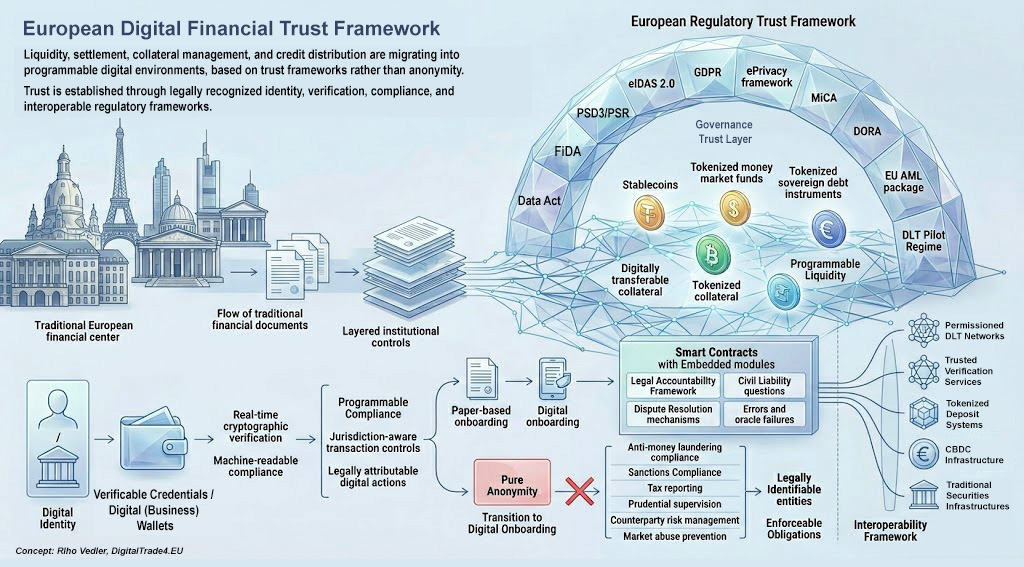
European financial markets are entering a structural transformation in which liquidity, settlement, collateral management, and credit distribution are increasingly migrating into programmable digital environments. Stablecoins, tokenized money market funds, tokenized sovereign debt instruments, and digitally transferable collateral are no longer speculative concepts confined to crypto-native ecosystems. They are emerging as components of institutional financial infrastructure.… Read more
-
Mauritius Moves Toward the Future of Digital Trade: Reform of the Electronic Transactions Act 2026
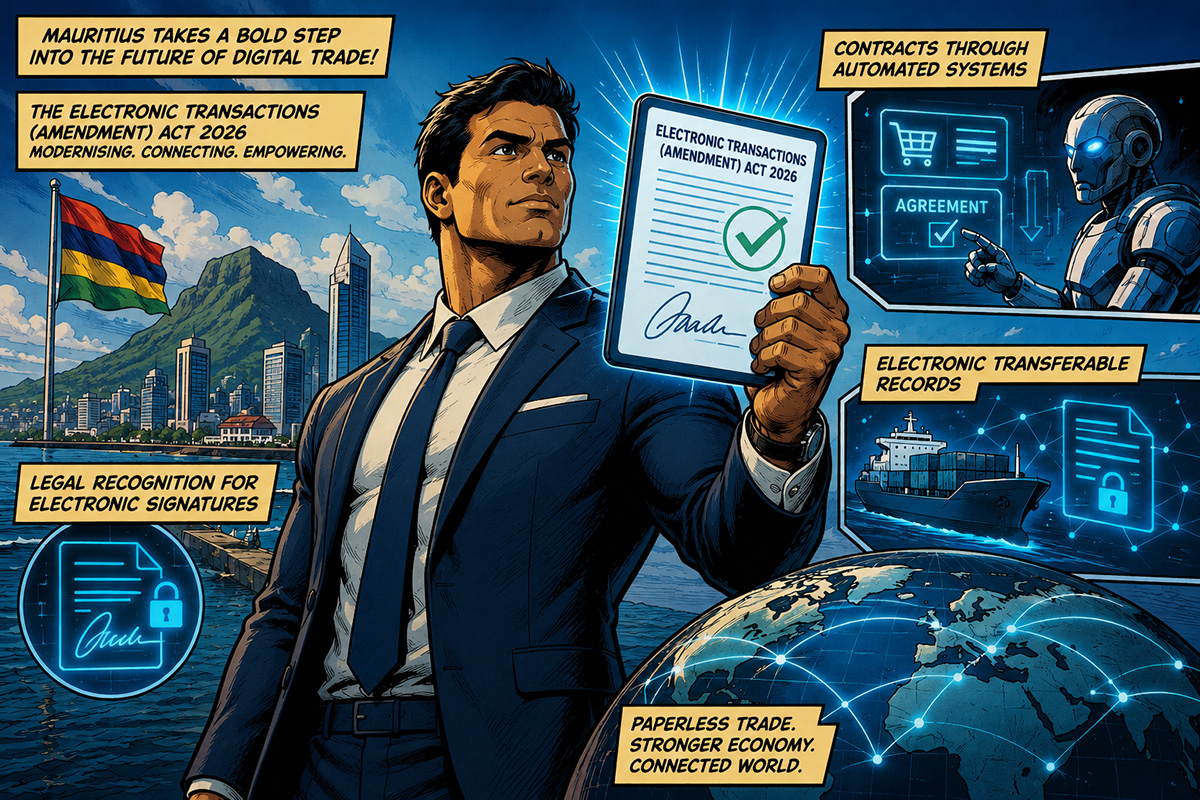
In 2026, the Government of Mauritius introduced a major reform package to its Electronic Transactions Act through the Electronic Transactions (Amendment) Bill No. V of 2026. The objective of the reform is to modernise the country’s legal framework for digital commerce and strengthen legal certainty for cross-border electronic transactions. The amendments address electronic signatures, automated… Read more
-
Smart Data and Digital Trade: How Data-Driven Value Chains Could Transform International Trade and Trade Finance
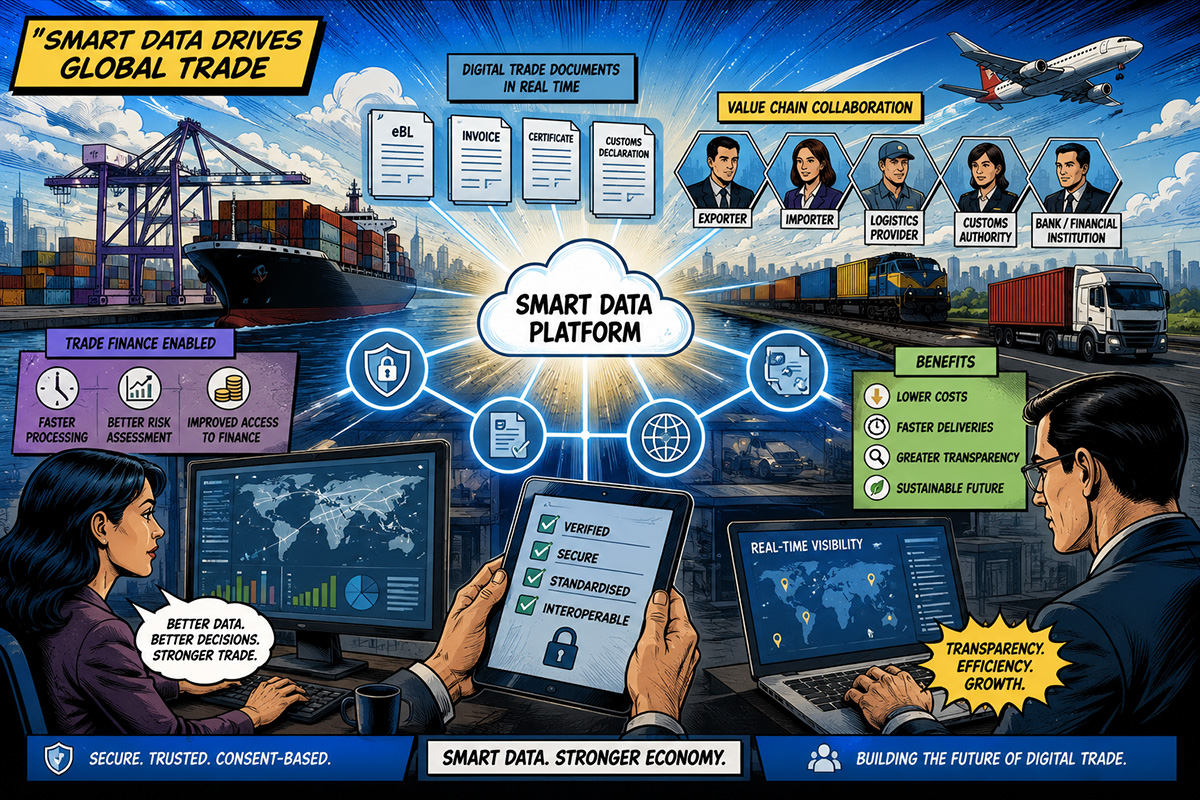
The UK Department for Business and Trade commissioned report “Economic analysis: understanding the costs and benefits of smart data use cases” examines how Smart Data schemes could reshape the economy, supply chains, and financial ecosystems over the next 15 years. The report focuses particularly on the role of Smart Data in international trade, trade finance,… Read more
-
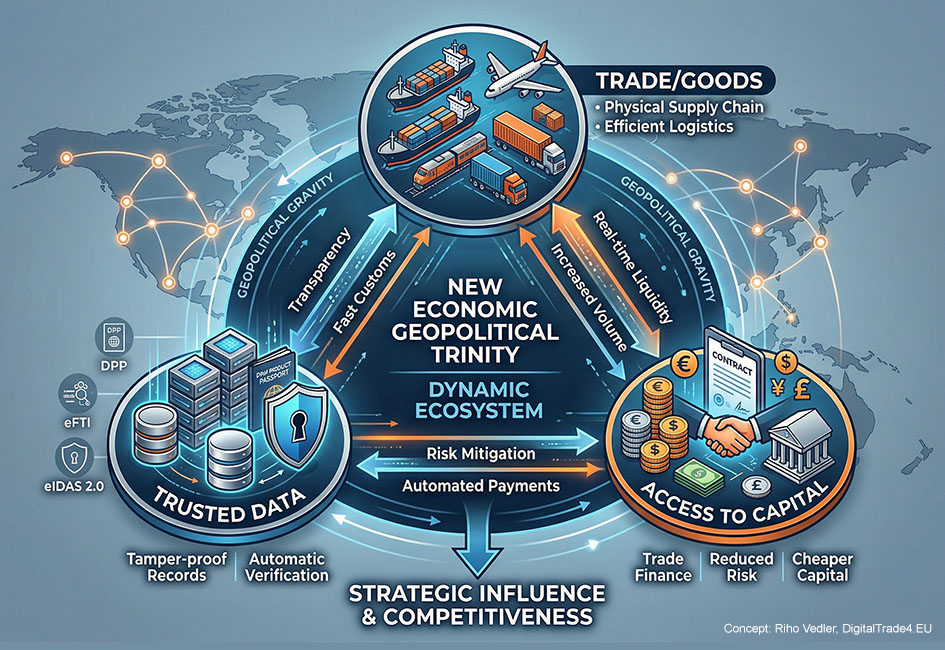
The European Union has quietly built one of the world’s most advanced digital regulatory ecosystems. With instruments such as the Digital Product Passport (DPP), electronic Freight Transport Information (eFTI), and eIDAS 2.0, the EU is shaping how data, trust, and compliance function within its internal market. Yet beyond its borders, this regulatory strength risks remaining… Read more
-
The digital economy has become a central pillar of global commerce and finance over the past decade. Contracts are executed electronically, financial instruments circulate through digital platforms, and an increasing share of assets and legal rights now exist entirely in electronic form. Blockchain technology, distributed ledger technology (DLT), automated transactions, and smart contracts are no… Read more