MLETR
-
Thailand Adopts Paperless Trade Treaty – A New Step in Regional Digitalization

Bangkok, 17 October 2025 — Thailand has officially deposited its instrument of accession to the Framework Agreement on Facilitation of Cross-border Paperless Trade in Asia and the Pacific (CPTA) with the United Nations. The Agreement will enter into force for Thailand on 15 January 2026, marking a major milestone in the country’s long-term digital trade… Read more
-
The Dutch government has introduced Bill No. 36 743, amending Book 8 of the Dutch Civil Code (Burgerlijk Wetboek) to recognize the use of an electronic bill of lading (elektronisch cognossement) in maritime transport. The aim is to align Dutch law with the UNCITRAL Model Law on Electronic Transferable Records (MLETR), thus creating legal equivalence… Read more
-
Lessons from BritCard: Why Architecture Matters for Digital Trust and Identity

Digital identity and trust are not just political or legal questions — they are also architectural ones. The UK government’s proposed BritCard system illustrates how design choices can deeply affect security, privacy, and public confidence. DIACC argues that Canada must avoid overly centralized control and instead promote architectures where the user owns and controls their… Read more
-
Digital trade has become a core component of global commerce. Yet, many countries remain tied to paper-based legal and administrative systems. The Commonwealth Model Law on Digital Trade (2025) was developed to provide member states with a unified and modern legal framework that removes barriers to the legal recognition of electronic documents and digital processes.… Read more
-
Digital Assets, Electronic Trade Documents, and the Challenge of Private International Law
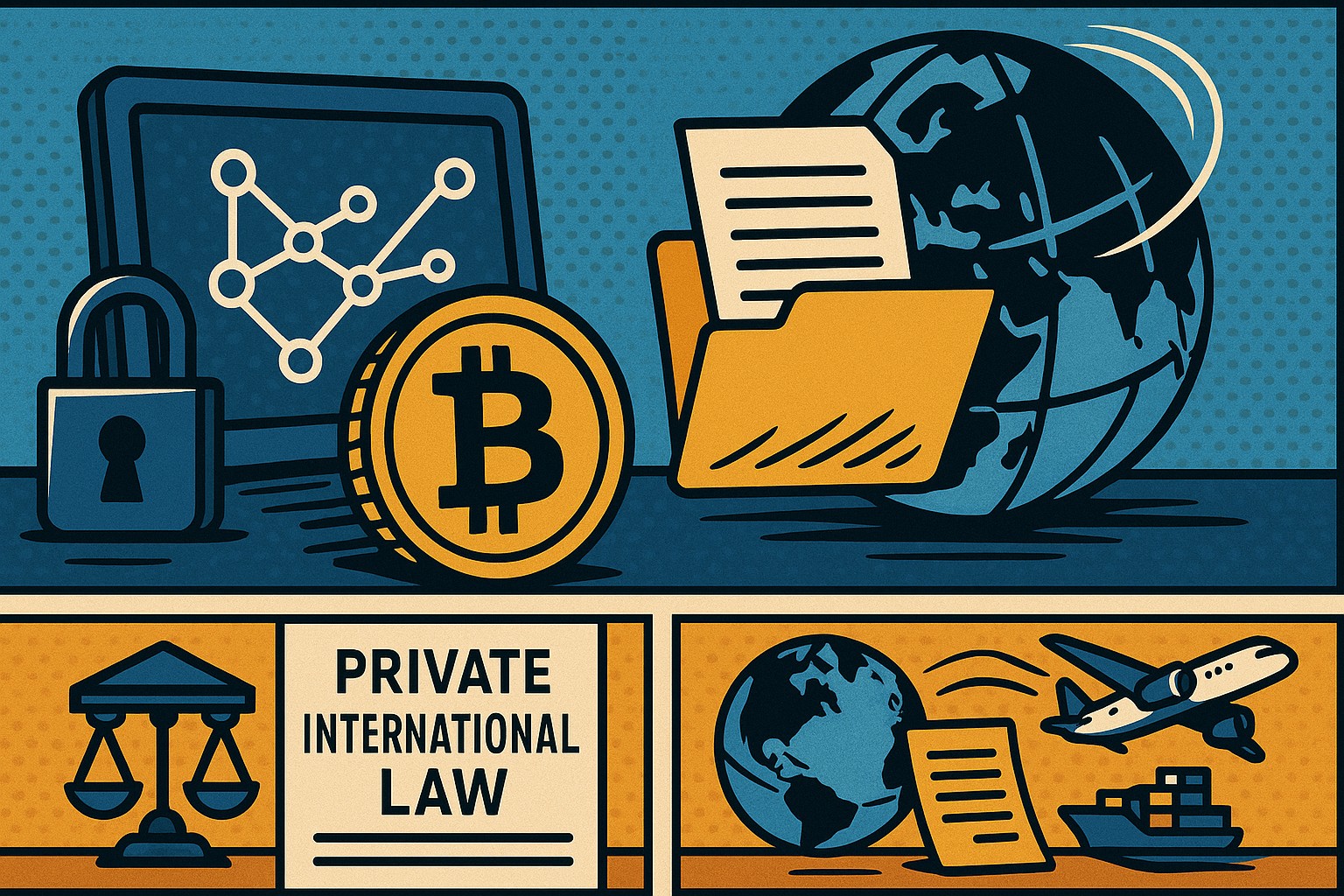
In June 2025, the Law Commission of England and Wales published Consultation Paper No. 273 on Digital assets and (electronic) trade documents in private international law, including Section 72 of the Bills of Exchange Act 1882. The paper addresses one of the most pressing questions in modern commerce: how should cross-border disputes involving blockchain, crypto-tokens,… Read more
-
India’s Landmark Maritime Overhaul: Understanding the Merchant Shipping Act, 2025
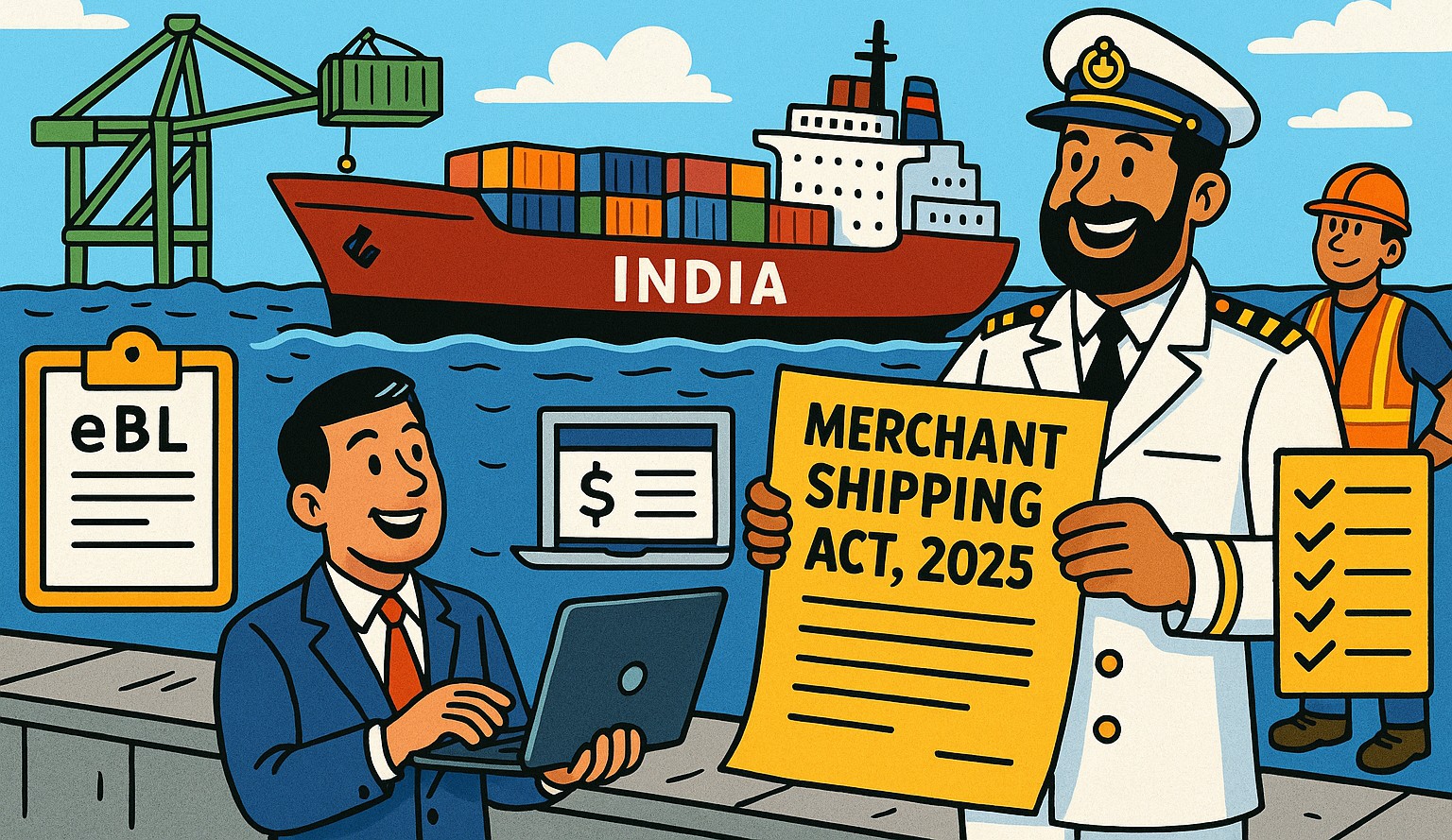
India has entered a new era of maritime governance with the enactment of the Merchant Shipping Act, 2025, which received the assent of the President on 18 August 2025. This legislation marks a turning point for the country’s shipping and trade sectors, as it replaces the Merchant Shipping Act of 1958, a law that had… Read more
-
France Becomes First European Union Country to Fully Embrace Digital Trade Instruments

Paris, August 14, 2025 – France has taken a historic leap into the digital age of global trade. With the publication of Decree No. 2025-811 in the Journal Officiel, the country has fully transposed the UNCITRAL Model Law on Electronic Transferable Records (MLETR) into its national legal framework. The reform, long awaited by the trade… Read more
-
Dutch Government Introduces MLETR-Lite Digital Trade Bill to Recognise Electronic Bills of Lading
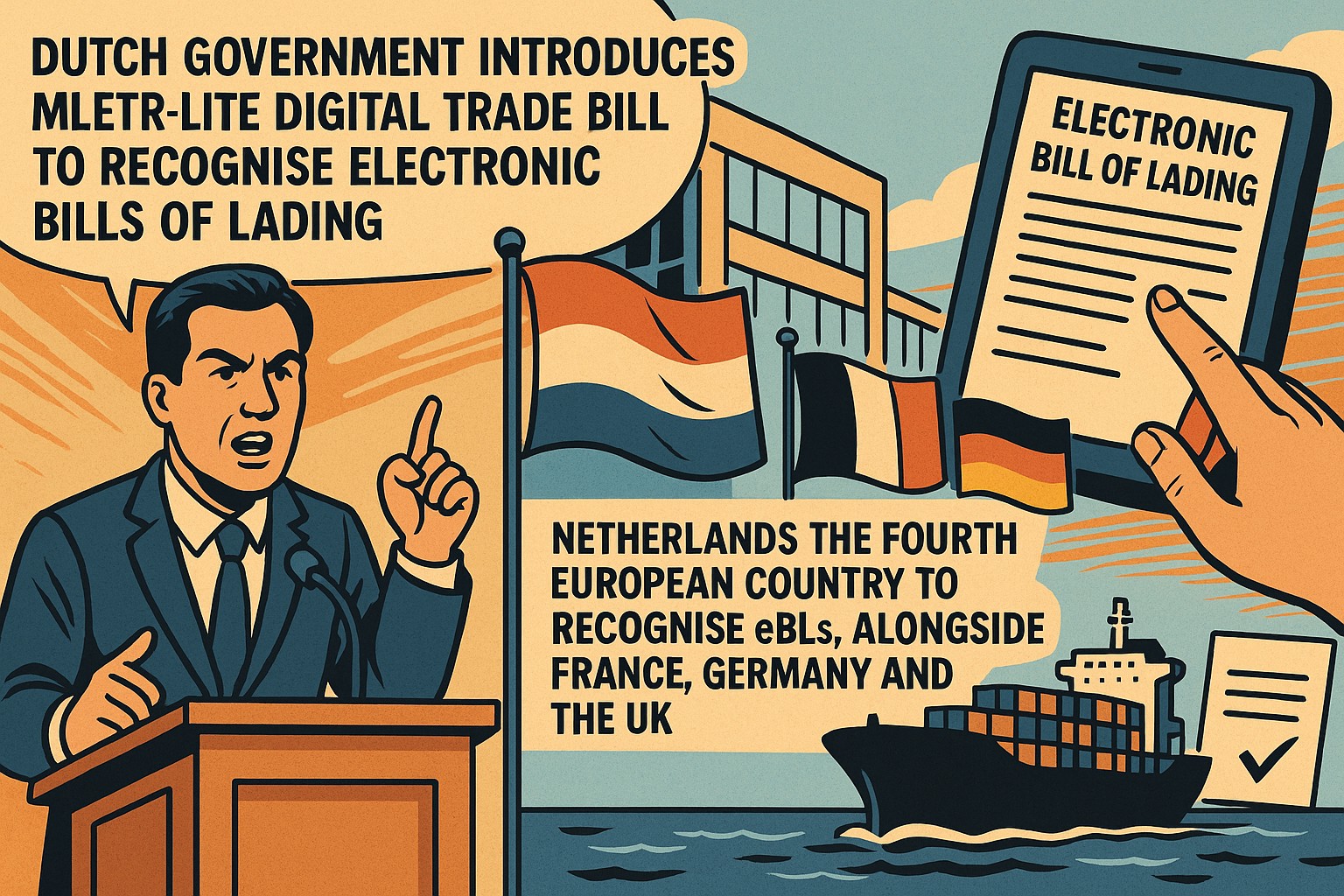
In a significant move towards the digitalisation of trade, the Dutch government has introduced a draft bill in the lower house of parliament to grant electronic bills of lading (eBLs) the same legal status as their paper counterparts. This initiative positions the Netherlands as the fourth European country—following France, Germany, and the UK—to formally recognise… Read more
-
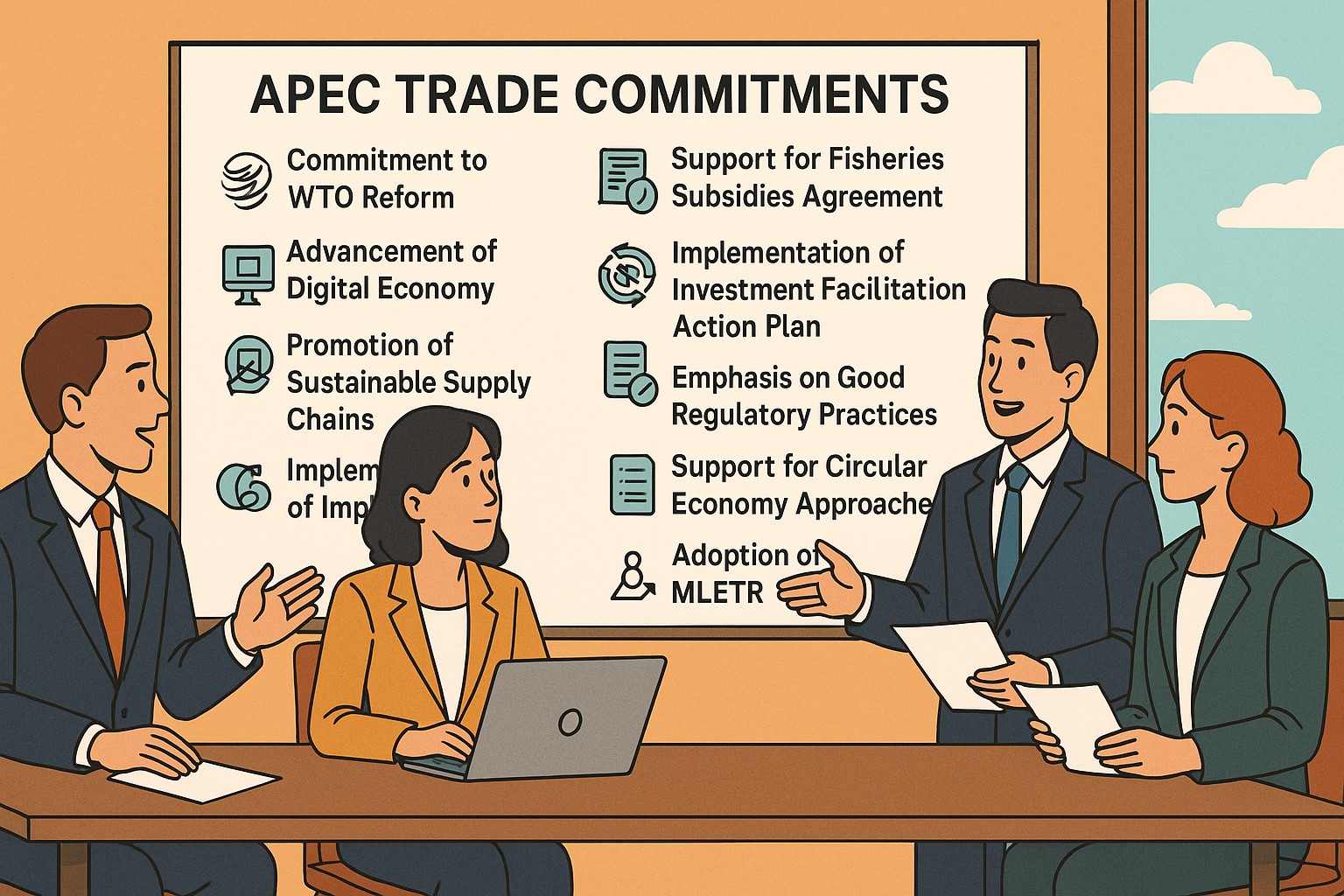
The 2025 APEC Ministers Responsible for Trade Meeting concluded in Jeju, Republic of Korea, on May 16, 2025, with a joint statement outlining significant decisions aimed at fostering regional economic resilience and cooperation. Key Decisions: These decisions reflect APEC’s commitment to addressing contemporary trade issues, fostering new ideas, facilitating economic growth, and building momentum toward… Read more
-
Digital Economy Agreements in Asia and the Pacific: Strategic Insights and Emerging Trends
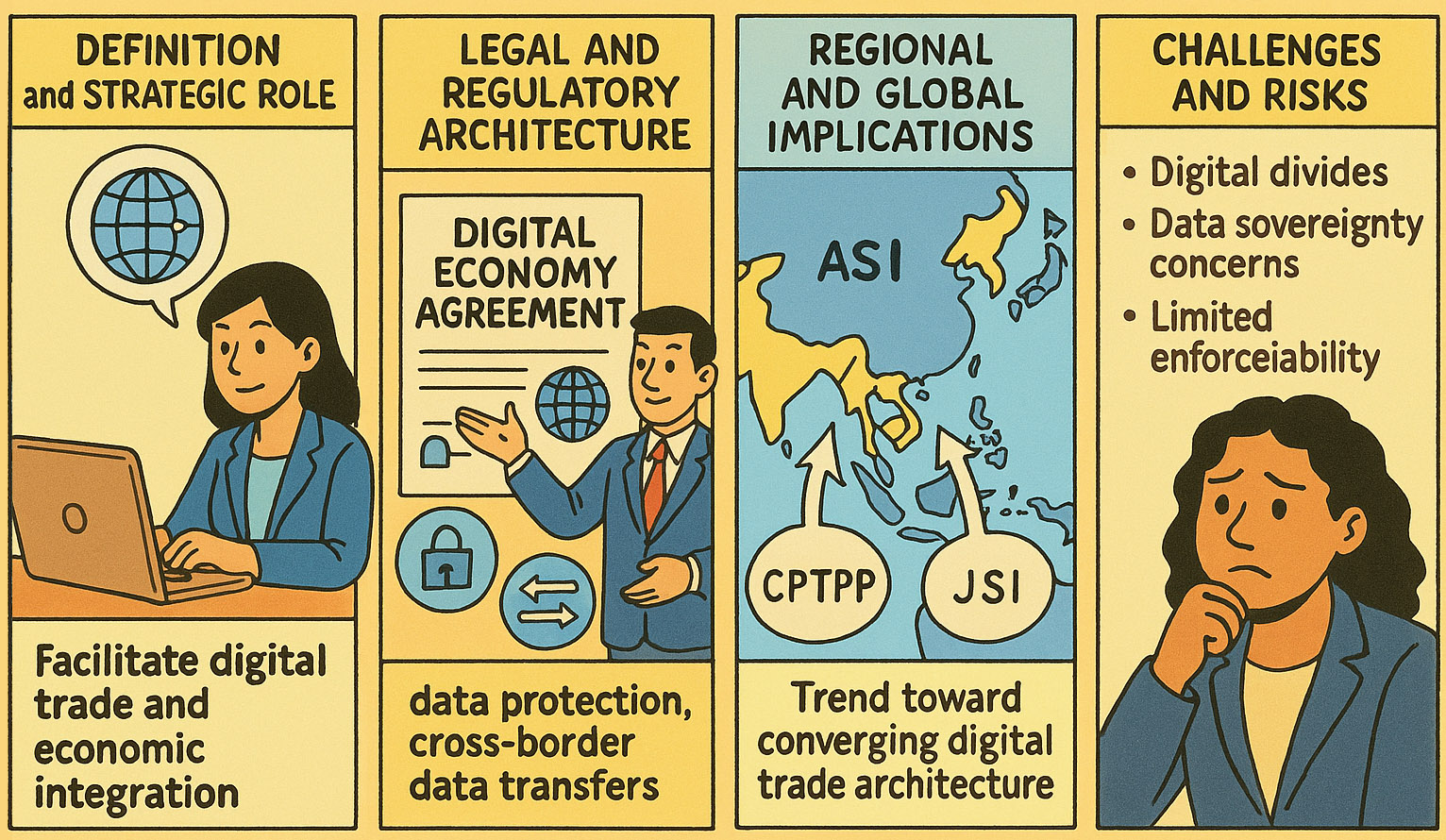
The Asian Development Bank (ADB) publication “Digital Economy Agreements in Asia and the Pacific” explores how countries across the region are navigating the rapid transformation of trade in the digital era. Digital Economy Agreements (DEAs) are becoming critical frameworks for fostering cross-border digital trade, ensuring regulatory coherence, and promoting economic integration in a landscape increasingly… Read more