
Latest news
-

When AI Becomes the Safer Choice: Will We Still Discover Better Solutions?
Imagine a clinician treating an unusual patient. An AI decision-support system recommends the established treatment. The clinician can see grounds for investigating another option, but doing so requires time, documentation… Read more
-

Japan’s FSA Selects Stablecoin Trade Settlement Pilot for Payment Innovation Project
TradeWaltz, NTT DATA and four major Japanese banks will test whether a bank’s approval of an export receivable can trigger stablecoin settlement directly from a digital trade workflow — shifting… Read more
-

Canada’s Bill C-39: A Broad Economic Reform Bill with a Major Digital Trade Component
Canada has introduced a wide-ranging economic reform bill that could significantly change the country’s rules for major infrastructure projects, transportation and supply chains, labour relations and, less visibly, digital trade.… Read more
-

Japan’s eBL Reform Moves the Bottleneck from Paper to Settlement
Once digital title can move almost instantly, why should the rest of the trade transaction still have to wait? That is the more important question raised by Japan’s latest move… Read more
-

Saudi Arabia’s Supply Chain Finance Consultation: What SAMA Proposes and What DigitalTrade4.EU Recommends
The Saudi Central Bank (SAMA) is consulting on new rules for supply chain finance, with the aim of establishing a clearer regulatory framework for supply chain finance providers, intermediaries and… Read more
-
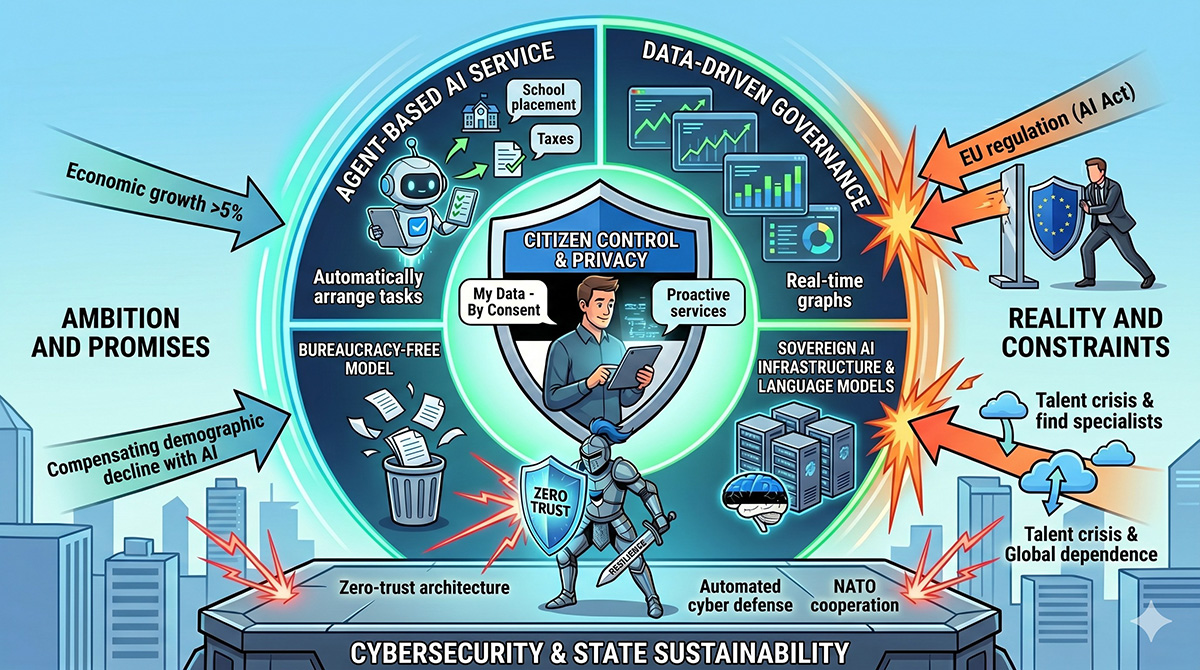
Estonia’s Digital Agenda 2035 – The World’s Most Ambitious Digital State Project?
Estonia’s new strategy document, Estonia’s Digital Agenda 2035, represents far more than a conventional public-sector IT development plan. In reality, it outlines a vision for an entirely new model of… Read more
-
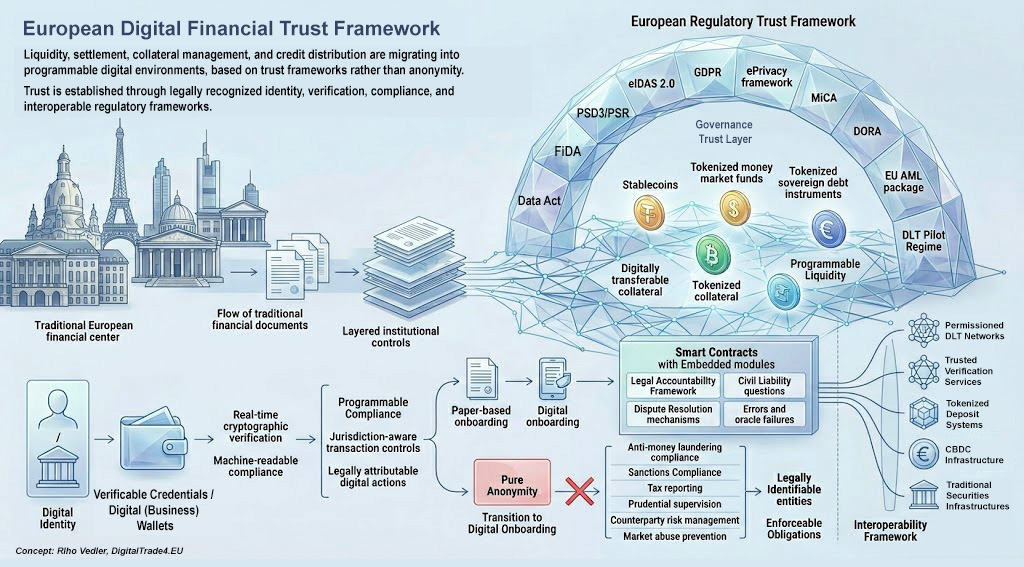
Europe’s Tokenized Financial Markets Will Depend on Trust Frameworks, Not Anonymity
European financial markets are entering a structural transformation in which liquidity, settlement, collateral management, and credit distribution are increasingly migrating into programmable digital environments. Stablecoins, tokenized money market funds, tokenized… Read more
-
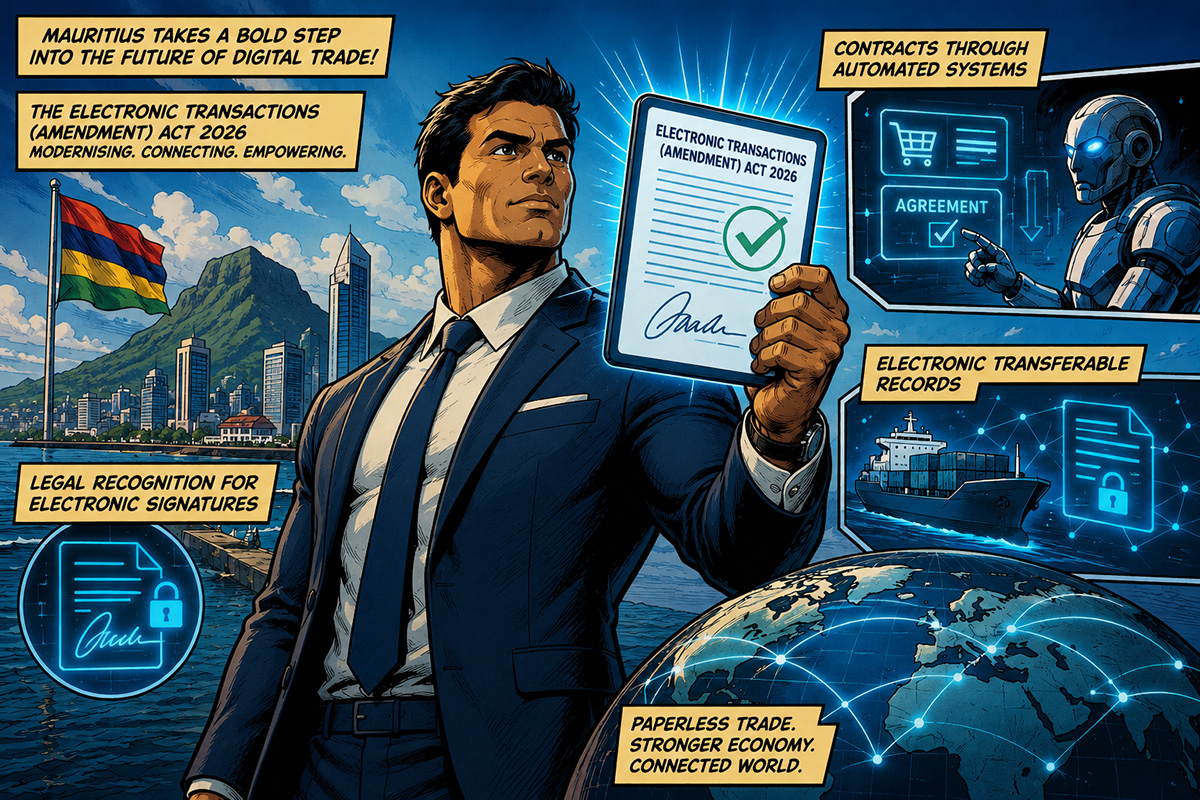
Mauritius Moves Toward the Future of Digital Trade: Reform of the Electronic Transactions Act 2026
In 2026, the Government of Mauritius introduced a major reform package to its Electronic Transactions Act through the Electronic Transactions (Amendment) Bill No. V of 2026. The objective of the… Read more
-
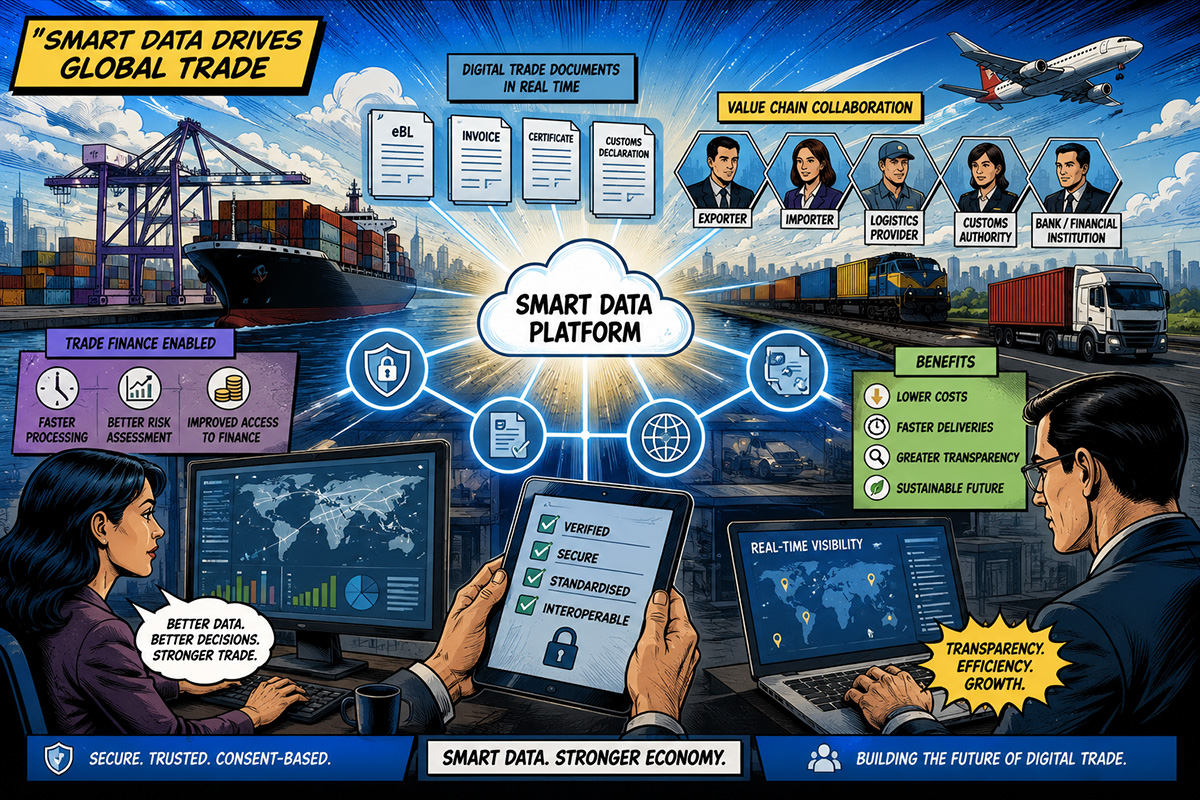
Smart Data and Digital Trade: How Data-Driven Value Chains Could Transform International Trade and Trade Finance
The UK Department for Business and Trade commissioned report “Economic analysis: understanding the costs and benefits of smart data use cases” examines how Smart Data schemes could reshape the economy,… Read more
Interesting videos
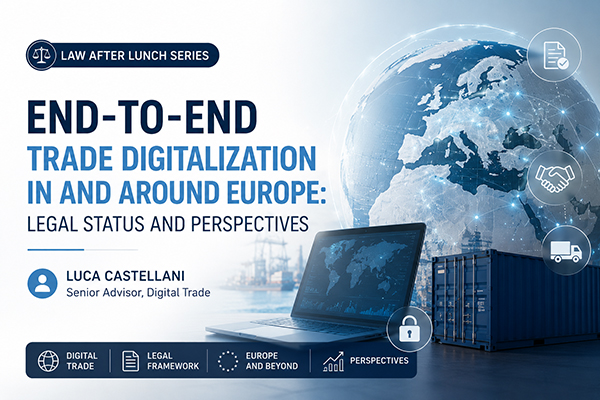
SOURCE:
Institut für Wirtschaftsrecht
End-to-end trade digitalization in and around Europe: legal status and perspectives
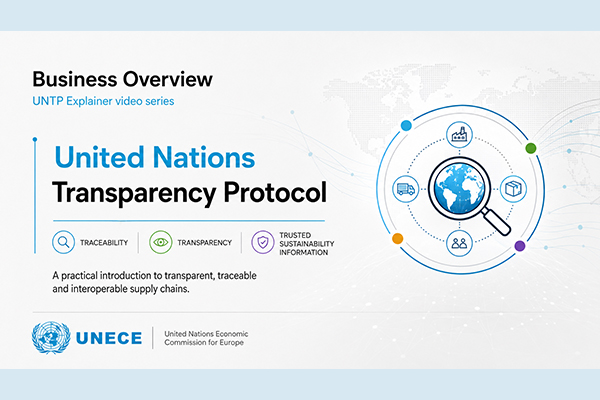
SOURCE: UNTP
The UNTP is the practical application of Recommendation 49.
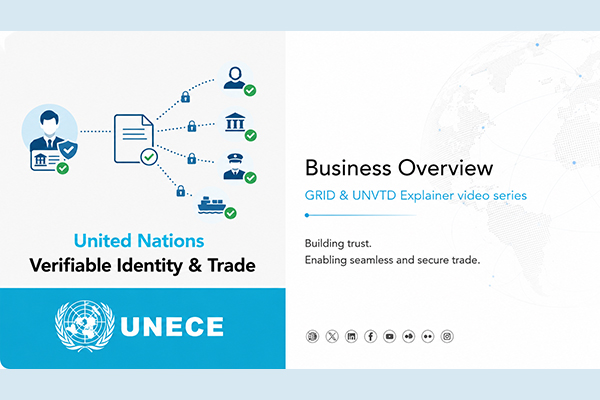
SOURCE: UNTP
Digital Trade and Development
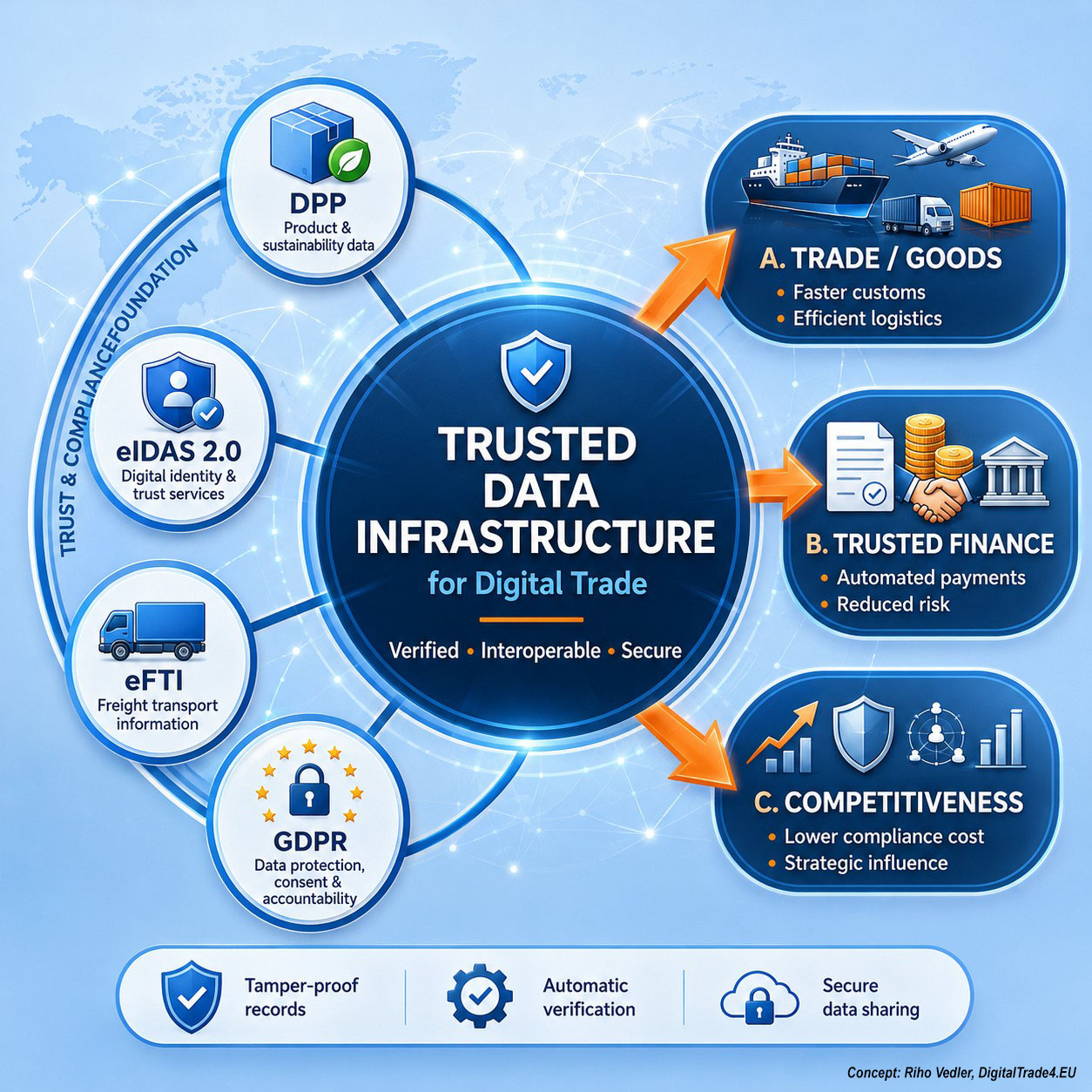
Digitalising Trade Finance for Europe’s Future
This podcast explores how Europe can accelerate the digitalisation of trade finance through trusted data infrastructure. It focuses on the challenges faced by SMEs, including limited access to finance, fragmented documentation, manual verification and high compliance costs.
The discussion highlights the role of key EU regulatory frameworks — Digital Product Passport under the New Legislative Framework, eIDAS 2.0, eFTI and GDPR — in enabling verified data sharing, automated compliance and secure digital trade. Together, these frameworks can reduce risk, improve efficiency and strengthen Europe’s competitiveness in trade finance.
The role of a European Union Trade Services Governance
Ensure the existence of secure technological solutions accessible to the whole ecosystem, especially banks and businesses.
Foster the European TradeTech ecosystem, the solutions of which are often mature and can help achieve the goals of the reform.
Support the creation of a conducive framework for digitalisation of international trade documents at European Union level, notably when it comes to certification and management of open and interoperable ledgers.
Ensure that technical standards and requirements are clear and normative, as with PSD3 / PSR on payments, eIDAS 2 on digital identity and trust services, or e-FTI on electronic information on the transport of goods.

Technology and EU Legislation
eFTI Regulation
Digitalising the exchange of freight-related information between businesses and public authorities. It focuses on making data sharing more efficient, reducing paperwork, and improving communication in the transport and logistics sectors.
[Read more]
eIDAS 2.0 Regulation
The regulation introduces a European Digital Identity (EUDI), allowing EU citizens, residents, and businesses to have a secure and universally accepted digital identity. This can be used for identification and authentication in a range of services, such as trade, banking, healthcare, education, and more.
[Read more]
PSD3 & PSR Regulation
The third Payment Services Directive (PSD3) and the Payment Services Regulation (PSR) are new proposals from the European Commission that significantly alter the European payments market framework. These changes will affect banks, fintechs, payment service providers, and customers both legally and operationally.
[Read more]
Drive Digital Trade Innovation
110
Full Partners
Trade Associations, Logistics Providers, Shipping Lines, Banks and Insurances, Technology Innovators, Competent Authorities, etc.
62
from European Union countries
France, Belgium, Netherlands, Austria, Estonia, Finland, Italy, Latvia, Spain, Germany, Sweden, Poland, Luxembourg, Lithuania, Slovenia, Denmark, Bulgaria
48
from non-EU countries
Norway, United Kingdom, Switzerland, Montenegro, Japan, Singapore, Hong Kong, Australia, New Zealand, India, Nepal, Canada, United States of America, Cameroon, Morocco, Egypt, Kenya, Pakistan, Nigeria, Brazil, Uzbekistan, Turkey, Ukraine, Uganda
Join with our network DigitalTrade4.EU to be part of a community shaping the future of European supply chains through innovation and collaboration.