trade digitalisation
-
ISO 20022 Harmonisation as the Backbone of Digital Trade and Logistics Integration
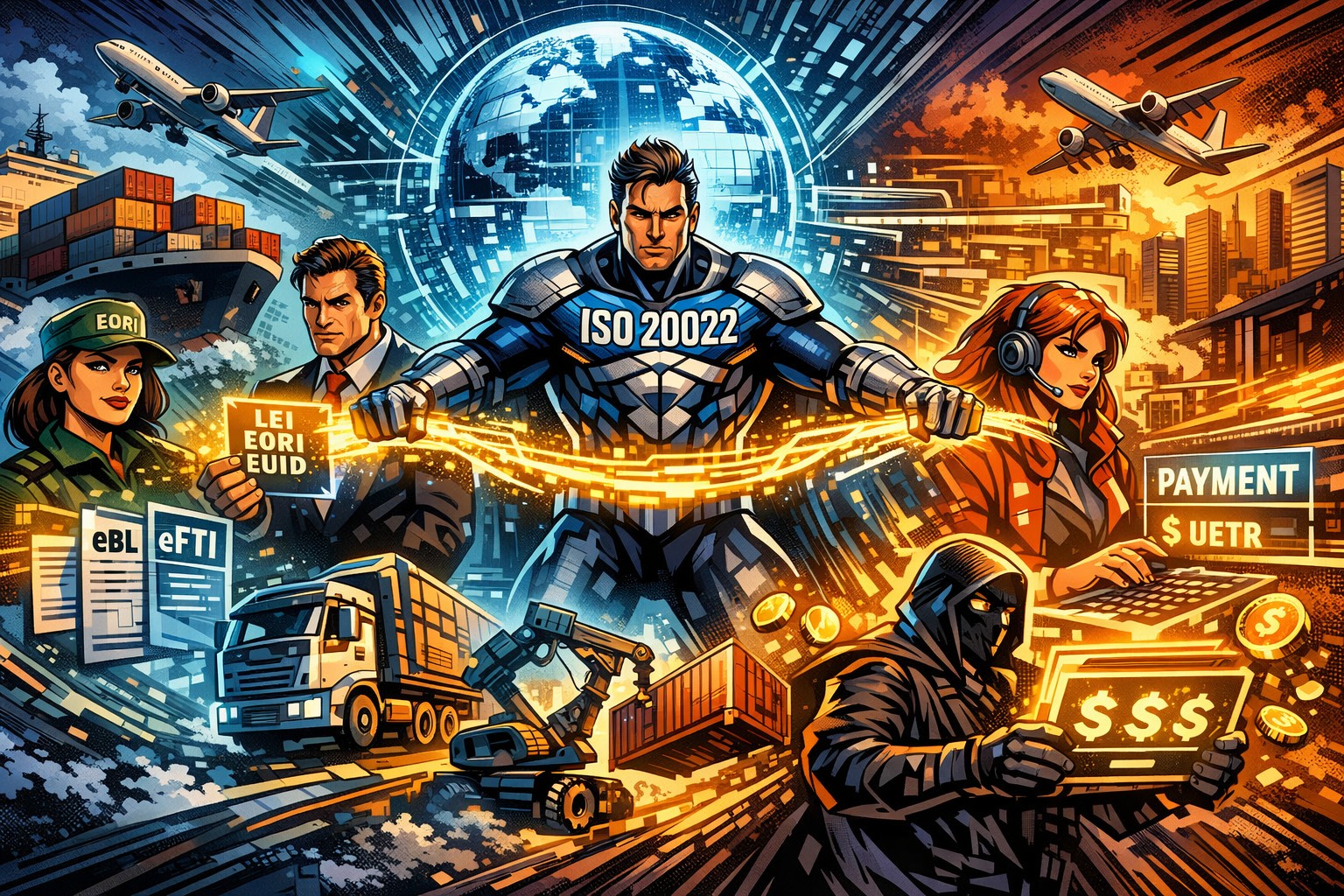
The digital transformation of international trade is accelerating, yet a fundamental bottleneck persists: the fragmentation of payment systems. The study “Fostering ISO 20022 Harmonisation: Cross-border payments interoperability and extension (PIE) task force – Task Team 3, Follow-up report (February 2026)” highlights that while ISO 20022 has been widely adopted, its implementation remains uneven across jurisdictions Read more
-
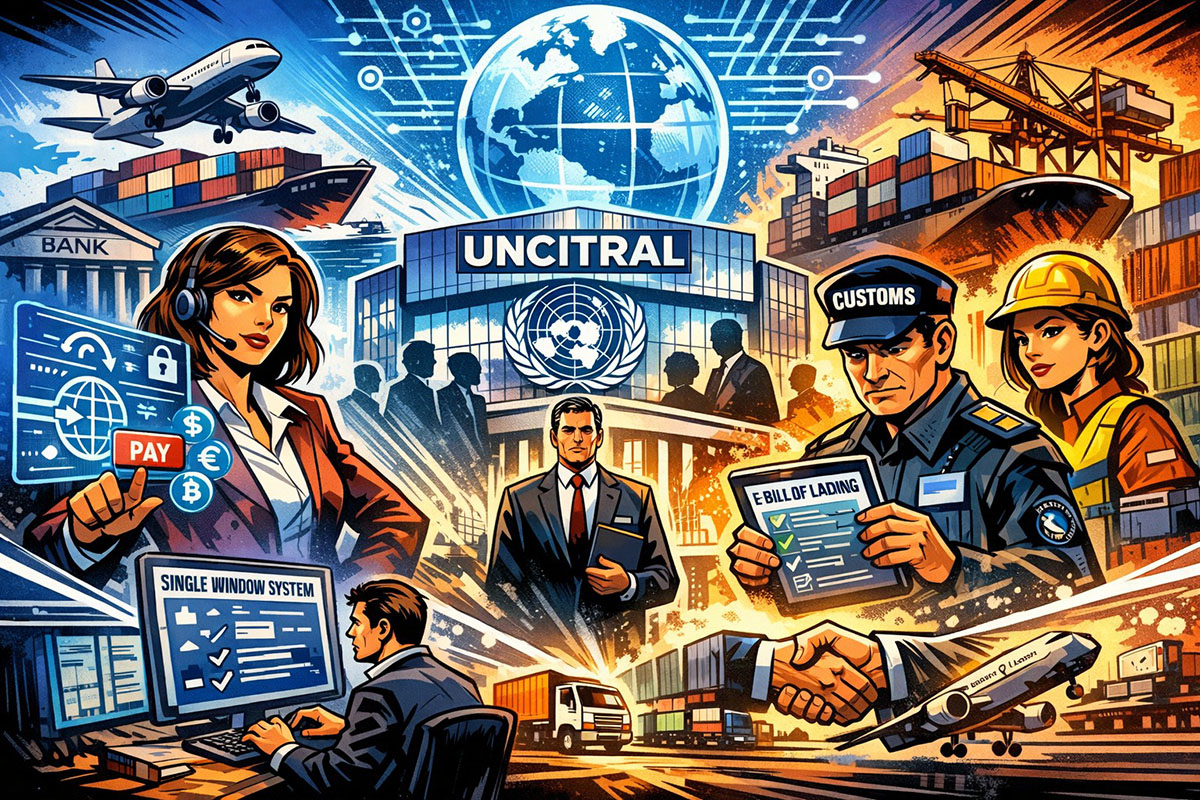
As global trade becomes increasingly digital, legal systems are racing to keep up. Payments are faster, documents are electronic, and supply chains span jurisdictions with very different rules. Against this backdrop, the United Nations Commission on International Trade Law (UNCITRAL) has quietly launched a set of processes that could shape how digital trade works across Read more
-
Digital trade is evolving rapidly, and Distributed Ledger Technology (DLT) is increasingly presented as a solution for improving transparency, efficiency, and trust in commercial transactions. From trade documents and supply chains to payments and digital assets, DLT is often promoted as a transformative infrastructure for modern trade systems. However, technology alone does not create legal Read more
-
United Nations Adopts New Convention Enabling Digital and Flexible Use of Cargo Documents
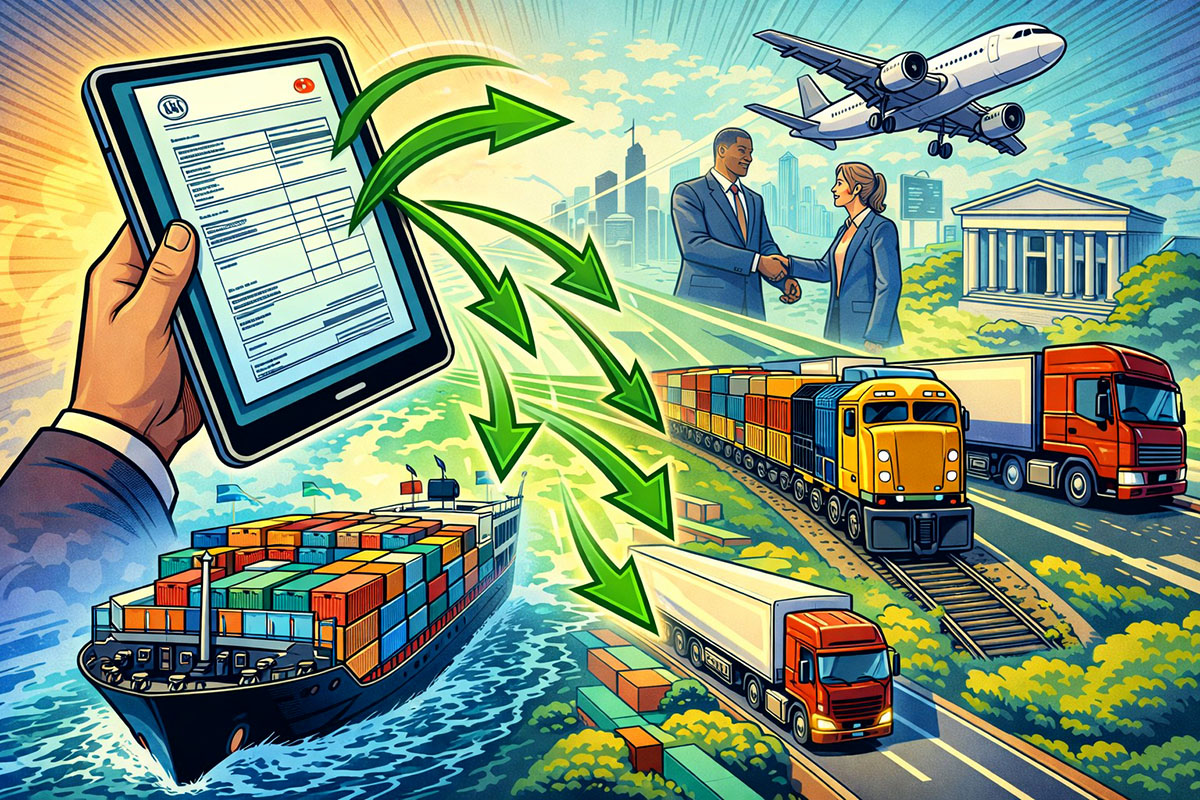
In December 2025, the United Nations General Assembly adopted the United Nations Convention on Negotiable Cargo Documents (NCDs), developed under the auspices of UNCITRAL and finalized in July 2025. The Convention represents a significant step forward in simplifying and digitalising international trade by extending the use of negotiable transport documents to all modes of transport. Read more
-
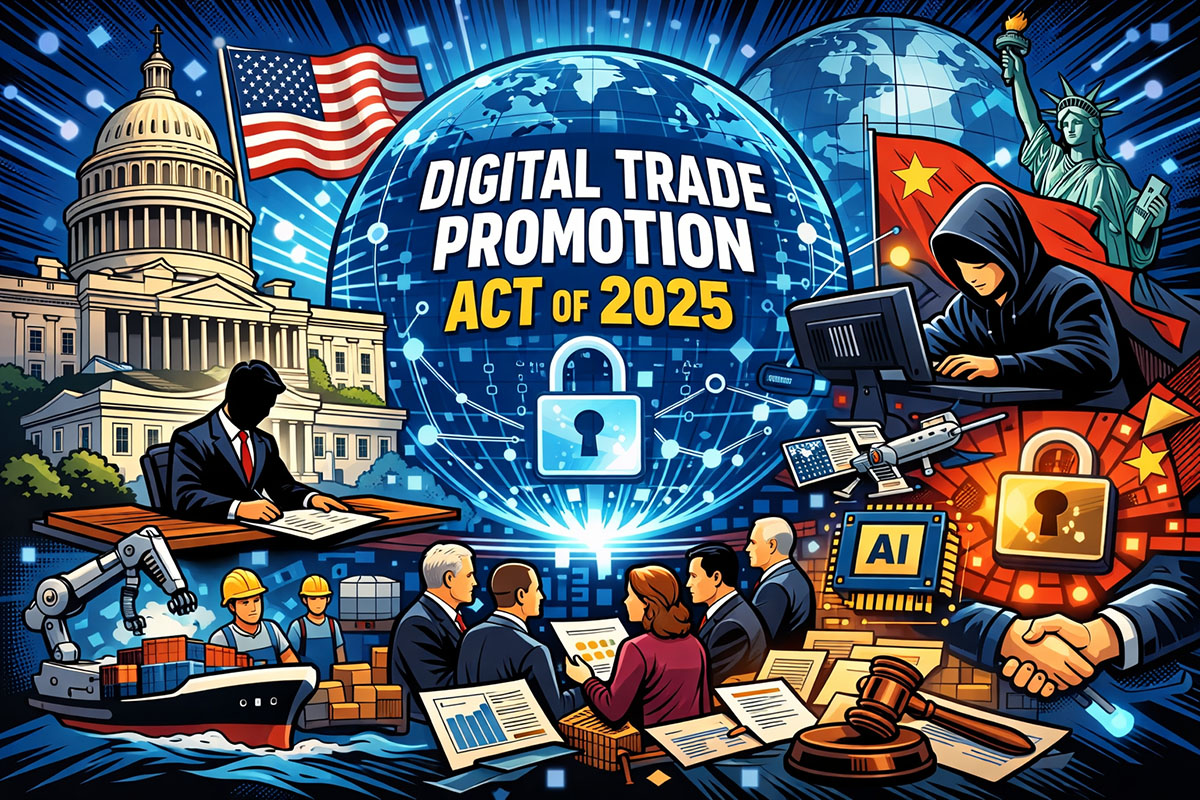
The Digital Trade Promotion Act of 2025, currently under consideration in the United States Congress, establishes a comprehensive legal framework authorizing the President to negotiate and conclude standalone digital trade agreements with trusted partners. The bill reflects a clear strategic objective: to shape global digital economy rules, strengthen U.S. competitiveness, and respond to restrictive digital Read more
-
In 2025, most international trade flows still rely on paper documents, even though the technological and legal solutions for paperless trade already exist. The real barrier is no longer technology — it is trust and coordinated implementation. Digital trade facilitation is rapidly becoming one of the most important directions of global economic policy. Around the Read more
-
Global E-Commerce Agreement Could Add Up to USD 8.7 Trillion to the World Economy
Digital trade has grown nearly twice as fast as goods trade over the past decade and is becoming a key driver of global growth. This conclusion comes from a WTO Staff Working Paper titled “Great Expectations: Quantifying the Potential Economic Impact of the WTO Agreement on E-Commerce” (ERSD-2025-06, authored by Eddy Bekkers, Javier López-González, and Read more
-
The Dutch government has introduced Bill No. 36 743, amending Book 8 of the Dutch Civil Code (Burgerlijk Wetboek) to recognize the use of an electronic bill of lading (elektronisch cognossement) in maritime transport. The aim is to align Dutch law with the UNCITRAL Model Law on Electronic Transferable Records (MLETR), thus creating legal equivalence Read more
-
Digital trade has become a core component of global commerce. Yet, many countries remain tied to paper-based legal and administrative systems. The Commonwealth Model Law on Digital Trade (2025) was developed to provide member states with a unified and modern legal framework that removes barriers to the legal recognition of electronic documents and digital processes. Read more
-
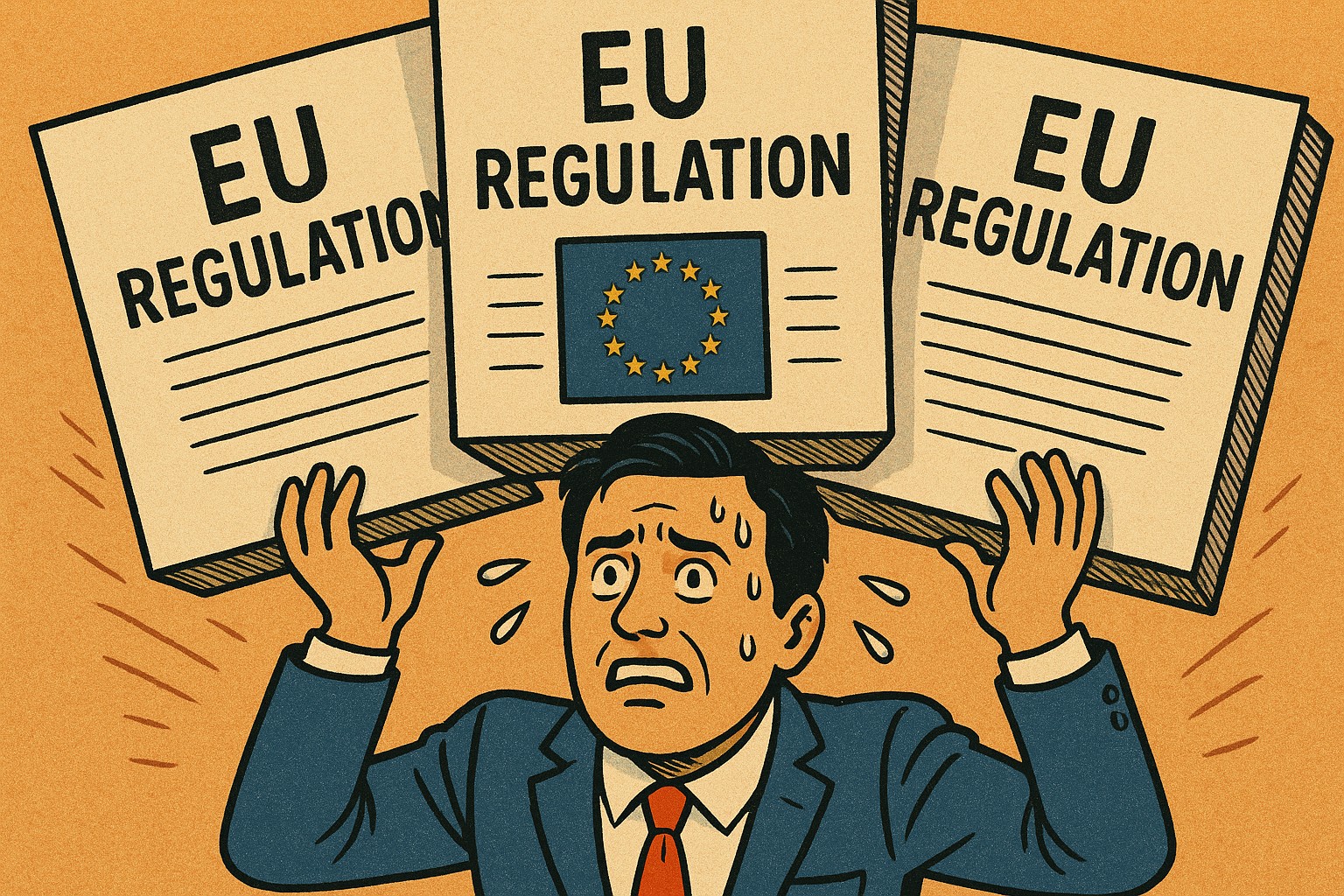
In recent years, the European Union has positioned itself as a global regulatory power in the digital economy. Through landmark initiatives such as the Digital Markets Act (DMA), the Digital Operational Resilience Act (DORA), and the Artificial Intelligence Act (AI Act), Brussels has sought to shape the conduct of major technology firms, financial institutions, and Read more